
Nostalgic Scenery
Landscapes · Snapshots · Everyday
21 photos

Dusk Clouds and Clouds The entire sky was blurred by the setting sun, creating a rich and layered warm glow. It slowly transitioned from a warm orange to a soft mist of pink and purple, with a thick and flowing cloud lying quietly in the gradually changing twilight. The dark cloud clusters complemented the gentle and intense glow of the sunset, creating a serene atmosphere that was unique to the evening. The overall atmosphere is quiet and soothing, with a lazy and gentle healing feeling in the twilight. The low saturation of dark architectural silhouettes weakens environmental clutter, and all visual focus is on the gradient sky and flowing clouds of the sunset. The intense yet not glaring warm glow dissolves the restlessness of the day, exuding a relaxed and tranquil atmosphere unique to dusk, conveying the peaceful, gentle, and healing emotions of the evening. It is a sunset scenery with a strong sense of life atmosphere.
Dusk Clouds and Clouds The entire sky was blurred by the setting sun, creating a rich and layered warm glow. It slowly transitioned from a warm orange to a soft mist of pink and purple, with a thick and flowing cloud lying quietly in the gradually changing twilight. The dark cloud clusters complemented the gentle and intense glow of the sunset, creating a serene atmosphere that was unique to the evening. The overall atmosphere is quiet and soothing, with a lazy and gentle healing feeling in the twilight. The low saturation of dark architectural silhouettes weakens environmental clutter, and all visual focus is on the gradient sky and flowing clouds of the sunset. The intense yet not glaring warm glow dissolves the restlessness of the day, exuding a relaxed and tranquil atmosphere unique to dusk, conveying the peaceful, gentle, and healing emotions of the evening. It is a sunset scenery with a strong sense of life atmosphere.
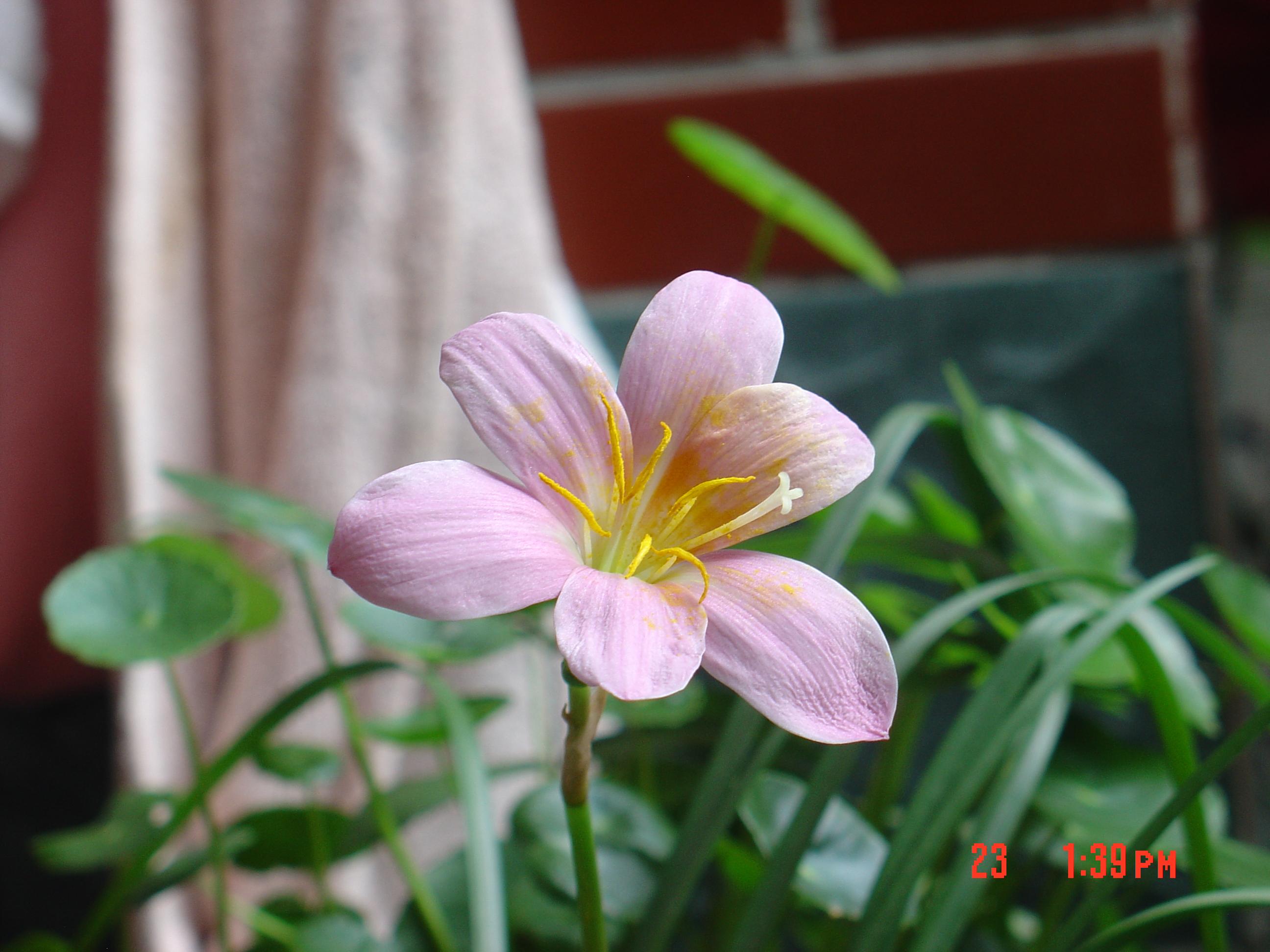
§ 0 § Scallion The flower in the picture is the Chinese chive orchid, also known as the wind and rain orchid. Its pink and soft petals are paired with bright yellow stamens, and its body is light and elegant. It has a unique habit of blooming intensively before the arrival of wind and rain, making it a highly wild ornamental flower. § 2 § Scientific name: Zephyranthes carinata Family and genus: Allium genus in the family Alliaceae Nicknames: Wind and Rain Flower, Red Jade Curtain, Acorus calamus Lotus Native to South America, it is widely cultivated in southern China and is a popular plant for home potted plants and courtyard greening. morphological character: Leaves: slender and linear, resembling chives in shape, with lush green clusters all year round, which is also the origin of the name "chive orchid". Flower: The flower has a relaxed and elegant shape, with 6 petals. In the picture, it is a gentle pink purple color, with a bright golden stamen dotted in the center. The stem is tall and straight, and a single flower grows at the top of the stem, fresh and lively. Growth habits and characteristics: Its most unique feature is that it blooms in large numbers after a rainstorm. Every time it experiences a heavy rain, it will bloom in succession, so it is named Fengyulan. It is naturally robust, drought and heat resistant, prefers light and shade, and is easy to maintain. It is suitable for balcony potted plants or ground planting to create landscapes. Value and symbolism: Ornamental value: Fresh colors, long flowering period, and a strong atmosphere during flowering, it is a highly representative summer flower. Symbolic meaning: It symbolizes strength, courage, fearlessness of wind and rain, and represents the vitality that continues to bloom after experiencing tests.
§ 0 § Scallion The flower in the picture is the Chinese chive orchid, also known as the wind and rain orchid. Its pink and soft petals are paired with bright yellow stamens, and its body is light and elegant. It has a unique habit of blooming intensively before the arrival of wind and rain, making it a highly wild ornamental flower. § 2 § Scientific name: Zephyranthes carinata Family and genus: Allium genus in the family Alliaceae Nicknames: Wind and Rain Flower, Red Jade Curtain, Acorus calamus Lotus Native to South America, it is widely cultivated in southern China and is a popular plant for home potted plants and courtyard greening. morphological character: Leaves: slender and linear, resembling chives in shape, with lush green clusters all year round, which is also the origin of the name "chive orchid". Flower: The flower has a relaxed and elegant shape, with 6 petals. In the picture, it is a gentle pink purple color, with a bright golden stamen dotted in the center. The stem is tall and straight, and a single flower grows at the top of the stem, fresh and lively. Growth habits and characteristics: Its most unique feature is that it blooms in large numbers after a rainstorm. Every time it experiences a heavy rain, it will bloom in succession, so it is named Fengyulan. It is naturally robust, drought and heat resistant, prefers light and shade, and is easy to maintain. It is suitable for balcony potted plants or ground planting to create landscapes. Value and symbolism: Ornamental value: Fresh colors, long flowering period, and a strong atmosphere during flowering, it is a highly representative summer flower. Symbolic meaning: It symbolizes strength, courage, fearlessness of wind and rain, and represents the vitality that continues to bloom after experiencing tests.
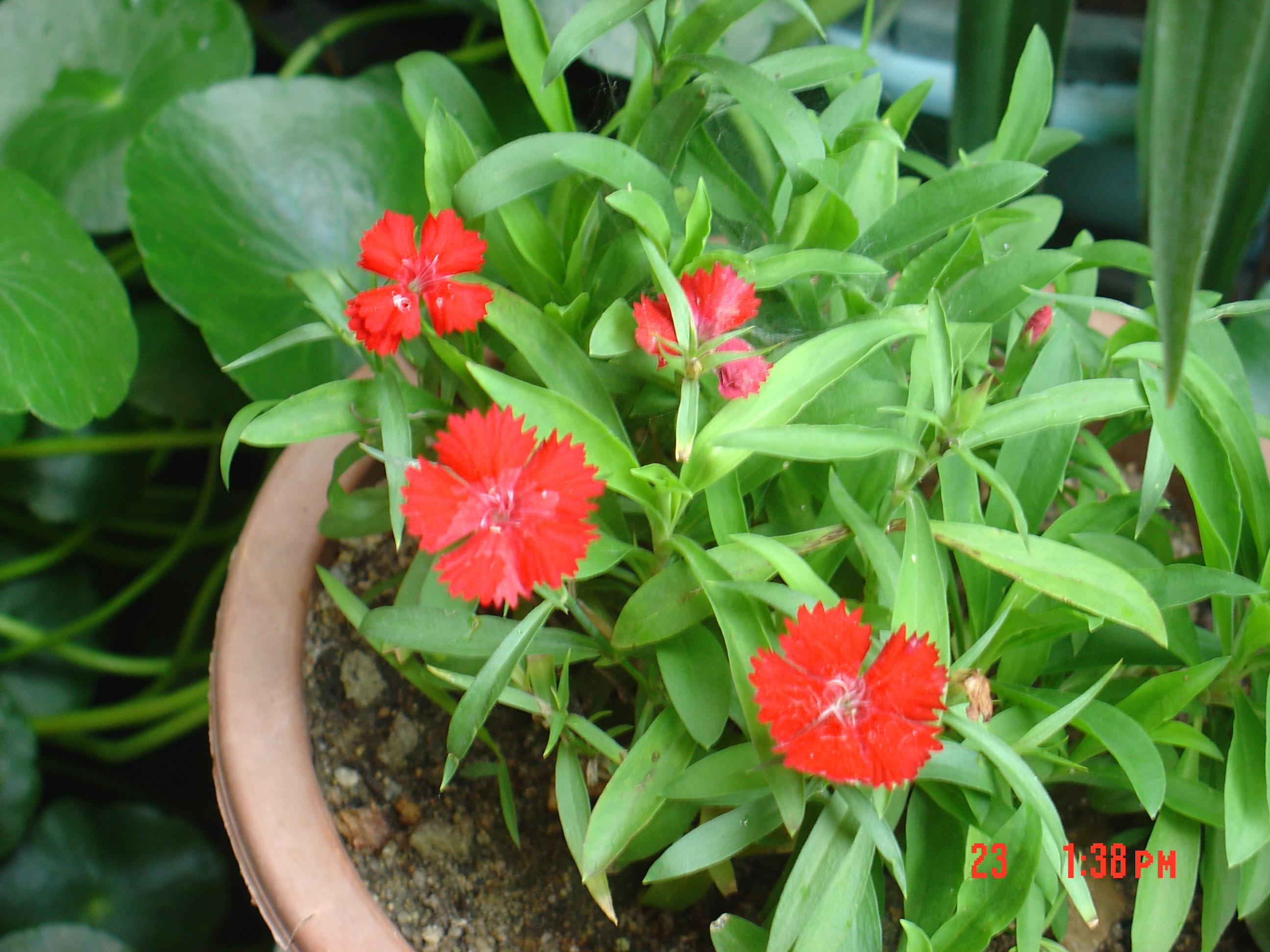
Orange and vibrant stone bamboo, potted and beautiful The plant in the picture is Caryophyllum, with bright orange red flowers blooming in potted plants. The edges of the petals are delicately serrated, paired with slender green leaves, making it a classic ornamental flower that combines beauty and easy maintenance. § 2 § Scientific name: Dianthus chinensis Family: Caryophyllaceae Caryophyllaceae Nicknames: Luoyang Flower, Stone Pillar Flower, Colorful Stone Bamboo It is a native perennial herbaceous flower in China and a very common ornamental variety in gardens and home potted plants. Its colors are rich and varied, and the picture shows a warm orange color scheme. morphological character: Leaves: linear lanceolate in shape, with a crisp texture, evergreen throughout the year, and appearing plump and lush when clustered. Flower: The top of the petals has a distinctive irregular serrated crack, and the flower shape is stretched. The orange red flower in the picture has a rich and bright color, and the center is often decorated with a light white texture. The flowering period is long-lasting. Growth habits: Caryophyllum is naturally robust, cold and drought resistant, and prefers environments with sufficient sunlight and good ventilation. It is easy to maintain and is very suitable for balcony potted plants. It avoids waterlogging in the soil and keeps the soil dry, which is more conducive to growth and flowering. Value and symbolism: Ornamental value: Colorful and long-lasting, planting in large areas can create a sea of flowers, and potted plants also have a strong atmosphere. Medicinal value: The whole plant can be used as medicine, with the effects of clearing heat, diuresis, promoting blood circulation, and unblocking meridians. Flower language symbolism: symbolizing pure love, boldness, and feminine beauty, often endowed with passionate and sincere emotional meanings.
Orange and vibrant stone bamboo, potted and beautiful The plant in the picture is Caryophyllum, with bright orange red flowers blooming in potted plants. The edges of the petals are delicately serrated, paired with slender green leaves, making it a classic ornamental flower that combines beauty and easy maintenance. § 2 § Scientific name: Dianthus chinensis Family: Caryophyllaceae Caryophyllaceae Nicknames: Luoyang Flower, Stone Pillar Flower, Colorful Stone Bamboo It is a native perennial herbaceous flower in China and a very common ornamental variety in gardens and home potted plants. Its colors are rich and varied, and the picture shows a warm orange color scheme. morphological character: Leaves: linear lanceolate in shape, with a crisp texture, evergreen throughout the year, and appearing plump and lush when clustered. Flower: The top of the petals has a distinctive irregular serrated crack, and the flower shape is stretched. The orange red flower in the picture has a rich and bright color, and the center is often decorated with a light white texture. The flowering period is long-lasting. Growth habits: Caryophyllum is naturally robust, cold and drought resistant, and prefers environments with sufficient sunlight and good ventilation. It is easy to maintain and is very suitable for balcony potted plants. It avoids waterlogging in the soil and keeps the soil dry, which is more conducive to growth and flowering. Value and symbolism: Ornamental value: Colorful and long-lasting, planting in large areas can create a sea of flowers, and potted plants also have a strong atmosphere. Medicinal value: The whole plant can be used as medicine, with the effects of clearing heat, diuresis, promoting blood circulation, and unblocking meridians. Flower language symbolism: symbolizing pure love, boldness, and feminine beauty, often endowed with passionate and sincere emotional meanings.
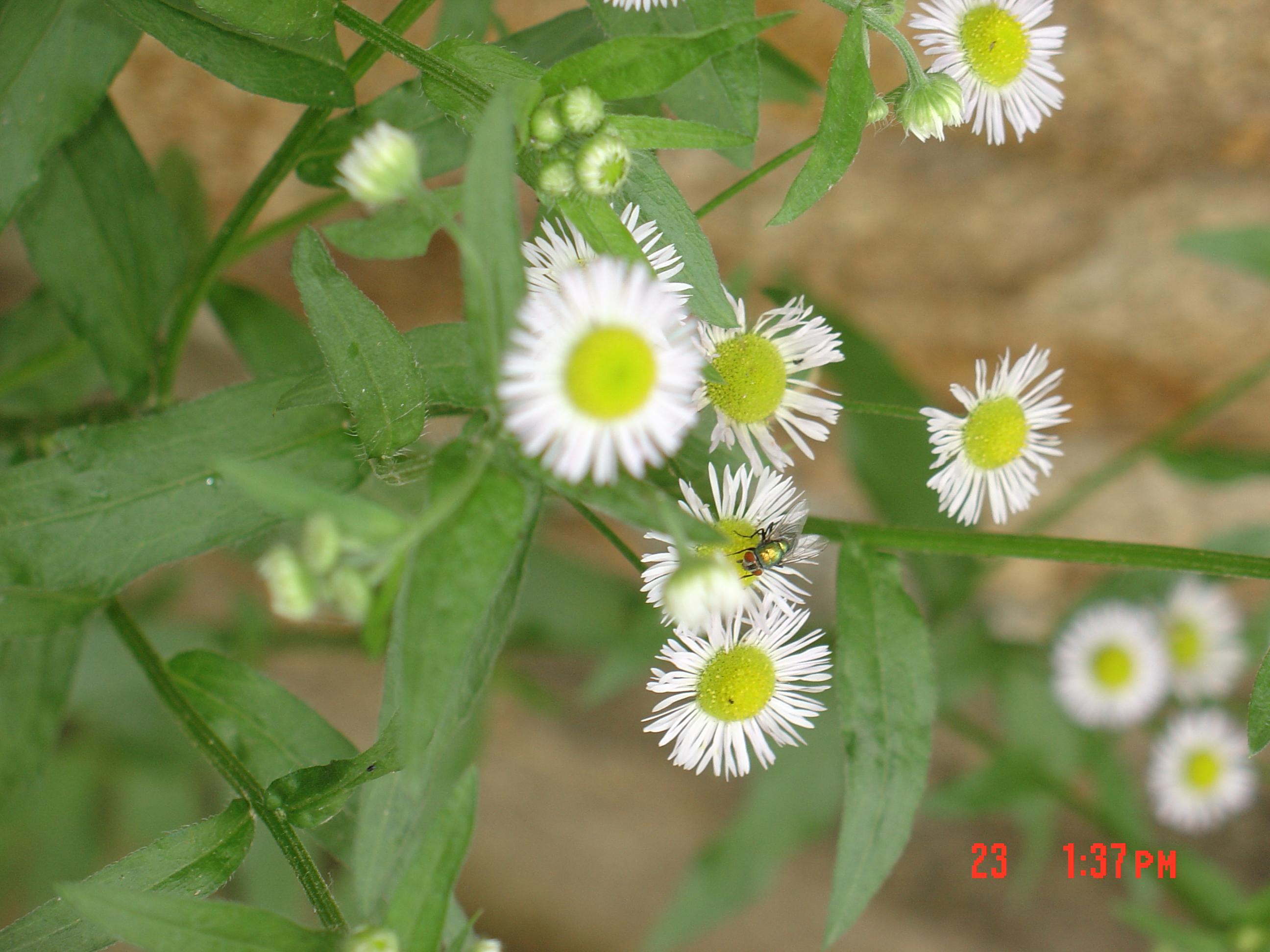
§ 0 § Wild Starry Light · One Year Pong In the picture, there is a blooming annual canopy, a common herbaceous plant in the Asteraceae family that can be seen everywhere. Its finely white tongue shaped petals surround the bright yellow flower center and bloom freely in the countryside. It is a vibrant local wildflower. § 2 § Scientific name: Erigeron annuus Family and genus: Asteraceae, Scutellaria genus Nicknames: Thousand layer Pagoda, Malaria Control Grass, Wild Artemisia, Wall Head Grass, etc It is native to North America and is now widely distributed on roadsides, fields, and mountains in various parts of China. It is an extremely adaptable annual herbaceous plant. morphological character: The overall height of the plant is 30-100 centimeters, the stem is upright with fine hairs, and the leaves are lanceolate, emerald green and stretched. The flower is a typical head shaped inflorescence in the Asteraceae family, with slender and white tongue shaped petals on the periphery and bright yellow tubular flowers in the center. The flowers are finely clustered and densely packed, and are fresh and agile, perfectly matching the morphological characteristics in the picture. Growth and ecological attributes: One year old Peng has extremely strong reproductive ability and rapidly spreads due to its tenacious vitality, thus being listed as an invasive weed. But it is also an excellent nectar plant that can provide nectar for insects such as bees and butterflies, playing an important role in the natural ecological cycle. pragmatic value: Medicinal value: The whole plant can be used as medicine, with a cooling effect. It can clear heat and detoxify, promote diuresis and stop diarrhea. It is commonly used in folk medicine to relieve gum swelling, gastroenteritis and other problems, and is therefore also known as "tooth swelling and elimination". Edible value: After blanching the tender stems and leaves in spring to remove bitterness, they can be cold mixed or stir fried for consumption. Ornamental value: The fresh and delicate flowers have a natural wild charm, making them a highly atmospheric native flower in the countryside.
§ 0 § Wild Starry Light · One Year Pong In the picture, there is a blooming annual canopy, a common herbaceous plant in the Asteraceae family that can be seen everywhere. Its finely white tongue shaped petals surround the bright yellow flower center and bloom freely in the countryside. It is a vibrant local wildflower. § 2 § Scientific name: Erigeron annuus Family and genus: Asteraceae, Scutellaria genus Nicknames: Thousand layer Pagoda, Malaria Control Grass, Wild Artemisia, Wall Head Grass, etc It is native to North America and is now widely distributed on roadsides, fields, and mountains in various parts of China. It is an extremely adaptable annual herbaceous plant. morphological character: The overall height of the plant is 30-100 centimeters, the stem is upright with fine hairs, and the leaves are lanceolate, emerald green and stretched. The flower is a typical head shaped inflorescence in the Asteraceae family, with slender and white tongue shaped petals on the periphery and bright yellow tubular flowers in the center. The flowers are finely clustered and densely packed, and are fresh and agile, perfectly matching the morphological characteristics in the picture. Growth and ecological attributes: One year old Peng has extremely strong reproductive ability and rapidly spreads due to its tenacious vitality, thus being listed as an invasive weed. But it is also an excellent nectar plant that can provide nectar for insects such as bees and butterflies, playing an important role in the natural ecological cycle. pragmatic value: Medicinal value: The whole plant can be used as medicine, with a cooling effect. It can clear heat and detoxify, promote diuresis and stop diarrhea. It is commonly used in folk medicine to relieve gum swelling, gastroenteritis and other problems, and is therefore also known as "tooth swelling and elimination". Edible value: After blanching the tender stems and leaves in spring to remove bitterness, they can be cold mixed or stir fried for consumption. Ornamental value: The fresh and delicate flowers have a natural wild charm, making them a highly atmospheric native flower in the countryside.
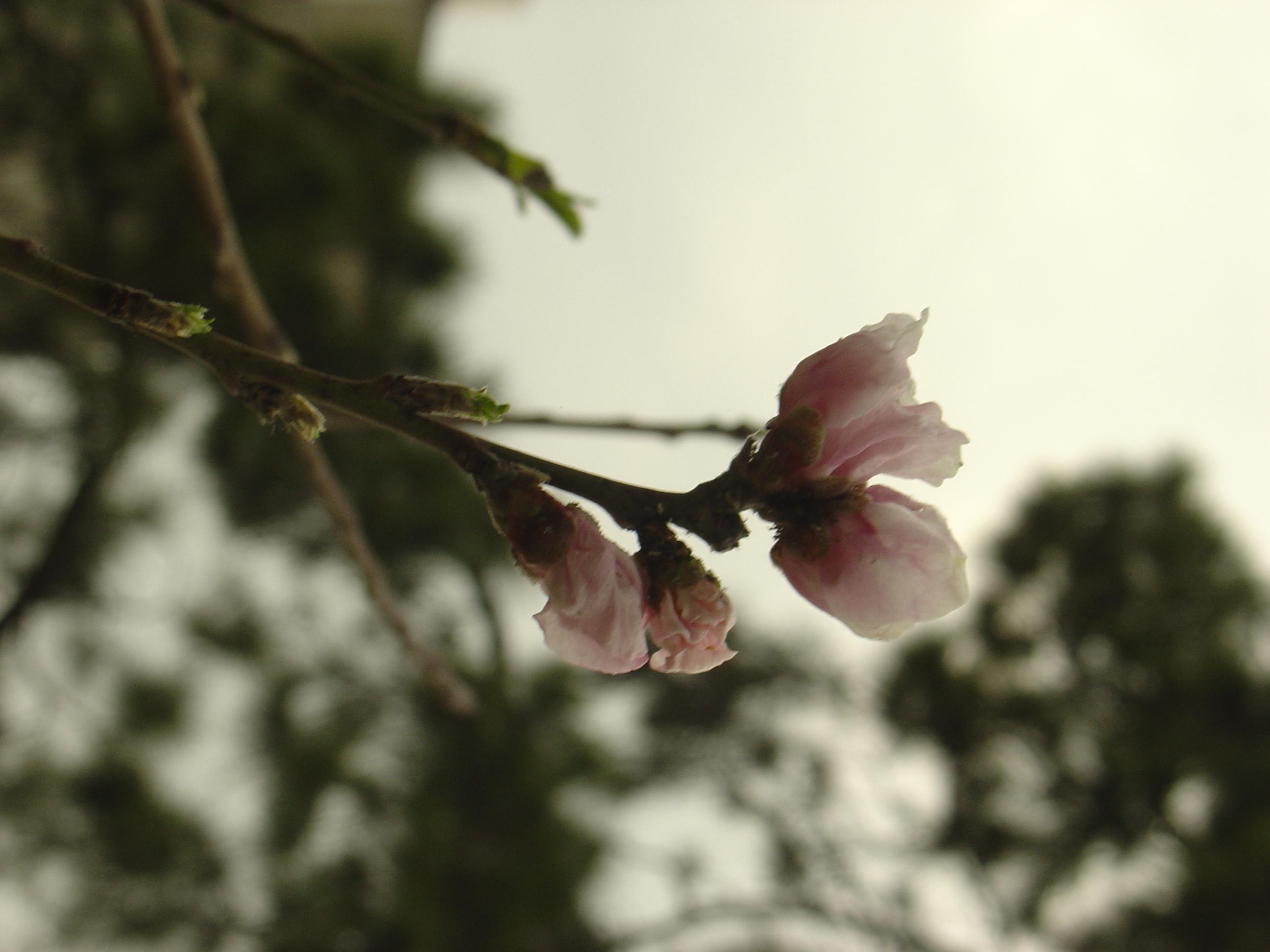
§ 0 § Spring marks on branches On the branches of the spring day, pale pink flowers quietly bloom, carrying a timid tenderness, hiding delicate thoughts unique to spring, quietly telling the softness of time. The spring light carried a hazy mist, and I caught sight of this newly blooming flower in the wind. A few petals of pale pink perched on the deep brown branches, not ostentatious, but like a gentle sigh, falling on the heart. The petals are tinged with light pink from the edge to the center, and the outermost petals are slightly curled with fine patterns, like crumpled and carefully flattened paper. Two or three flowers crowded together, some of which had already bloomed and revealed tender yellow stamens, like crushed stars embedded in them; Some are still wrapped, wrinkled, holding onto the secrets of Chunri and refusing to let go. The dark brown branches have a rough texture, like the patterns carved by time, but with their own stubbornness. The new shoots on the branches are tender and shiny, complementing the pink and white flowers with a wonderful harmony. The background is blurry white and green, like a shattered sky and tree shadows, highlighting the tranquility of this corner. The wind gently brushed by, and the petals trembled as if responding. There is no strong fragrance, only a faint sweetness mixed with the scent of green grass, so light that it is almost impossible to grasp, but it still lingers in the nose, like a gentle dream. The flowers bloom so quietly, not hoping to be praised by others, just following their own rhythm, slowly kneading the tenderness of spring into the petals. The beauty of spring is not only about the colorful and lively atmosphere, but also about the quiet and timid blooming. They don't compete with anyone for beauty, but inadvertently, they quietly warm people's hearts. The wind started again, and a petal gently fell, like a small spring letter, falling in the palm of my hand and also in this gentle spring.
§ 0 § Spring marks on branches On the branches of the spring day, pale pink flowers quietly bloom, carrying a timid tenderness, hiding delicate thoughts unique to spring, quietly telling the softness of time. The spring light carried a hazy mist, and I caught sight of this newly blooming flower in the wind. A few petals of pale pink perched on the deep brown branches, not ostentatious, but like a gentle sigh, falling on the heart. The petals are tinged with light pink from the edge to the center, and the outermost petals are slightly curled with fine patterns, like crumpled and carefully flattened paper. Two or three flowers crowded together, some of which had already bloomed and revealed tender yellow stamens, like crushed stars embedded in them; Some are still wrapped, wrinkled, holding onto the secrets of Chunri and refusing to let go. The dark brown branches have a rough texture, like the patterns carved by time, but with their own stubbornness. The new shoots on the branches are tender and shiny, complementing the pink and white flowers with a wonderful harmony. The background is blurry white and green, like a shattered sky and tree shadows, highlighting the tranquility of this corner. The wind gently brushed by, and the petals trembled as if responding. There is no strong fragrance, only a faint sweetness mixed with the scent of green grass, so light that it is almost impossible to grasp, but it still lingers in the nose, like a gentle dream. The flowers bloom so quietly, not hoping to be praised by others, just following their own rhythm, slowly kneading the tenderness of spring into the petals. The beauty of spring is not only about the colorful and lively atmosphere, but also about the quiet and timid blooming. They don't compete with anyone for beauty, but inadvertently, they quietly warm people's hearts. The wind started again, and a petal gently fell, like a small spring letter, falling in the palm of my hand and also in this gentle spring.

§ 0 § Twilight gap light In the twilight of the sky, the clouds are tinged with a soft warm light by the setting sun, as if hiding the last ray of tenderness in the clouds. This photo captures the sky scene at dusk. The clouds present distinct layers of blue and white in the twilight, with a soft warm yellow hue blended by the afterglow of the setting sun, as if light seeps through the gaps of the clouds, kneading the sky into a gentle gradient. There are no unnecessary scenery, only changes in the sky and clouds, yet the unique tranquility and tenderness of dusk are fully preserved.
§ 0 § Twilight gap light In the twilight of the sky, the clouds are tinged with a soft warm light by the setting sun, as if hiding the last ray of tenderness in the clouds. This photo captures the sky scene at dusk. The clouds present distinct layers of blue and white in the twilight, with a soft warm yellow hue blended by the afterglow of the setting sun, as if light seeps through the gaps of the clouds, kneading the sky into a gentle gradient. There are no unnecessary scenery, only changes in the sky and clouds, yet the unique tranquility and tenderness of dusk are fully preserved.
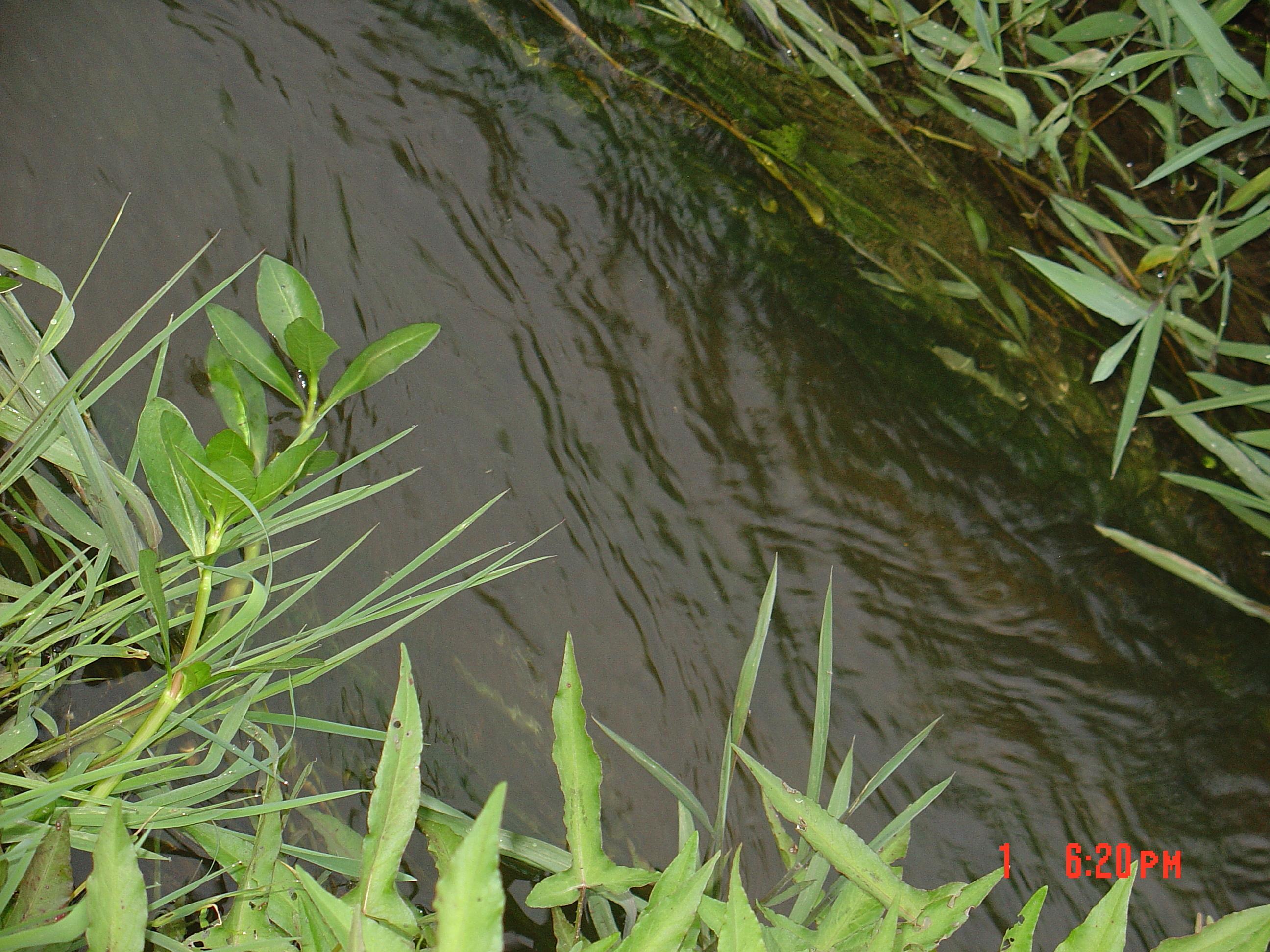
§ 0 § Green Shadow on the Riverbank The surface of the shallow stream ripples with fine ripples, and the wild grass and greenery along the shore make it the quietest natural corner in summer. This photo captures a corner of a shallow river in the countryside: the water surface is covered with fine ripples, as if gently brushed by the evening breeze, with a flowing texture; The wild grass and aquatic plants on the shore stretch their fresh green leaves, casting a faint shadow by the water's edge. There is no noisy scenery, only streams, wild grass, and ripples on the water surface. It is a moment of healing that can be seen everywhere in summer.
§ 0 § Green Shadow on the Riverbank The surface of the shallow stream ripples with fine ripples, and the wild grass and greenery along the shore make it the quietest natural corner in summer. This photo captures a corner of a shallow river in the countryside: the water surface is covered with fine ripples, as if gently brushed by the evening breeze, with a flowing texture; The wild grass and aquatic plants on the shore stretch their fresh green leaves, casting a faint shadow by the water's edge. There is no noisy scenery, only streams, wild grass, and ripples on the water surface. It is a moment of healing that can be seen everywhere in summer.
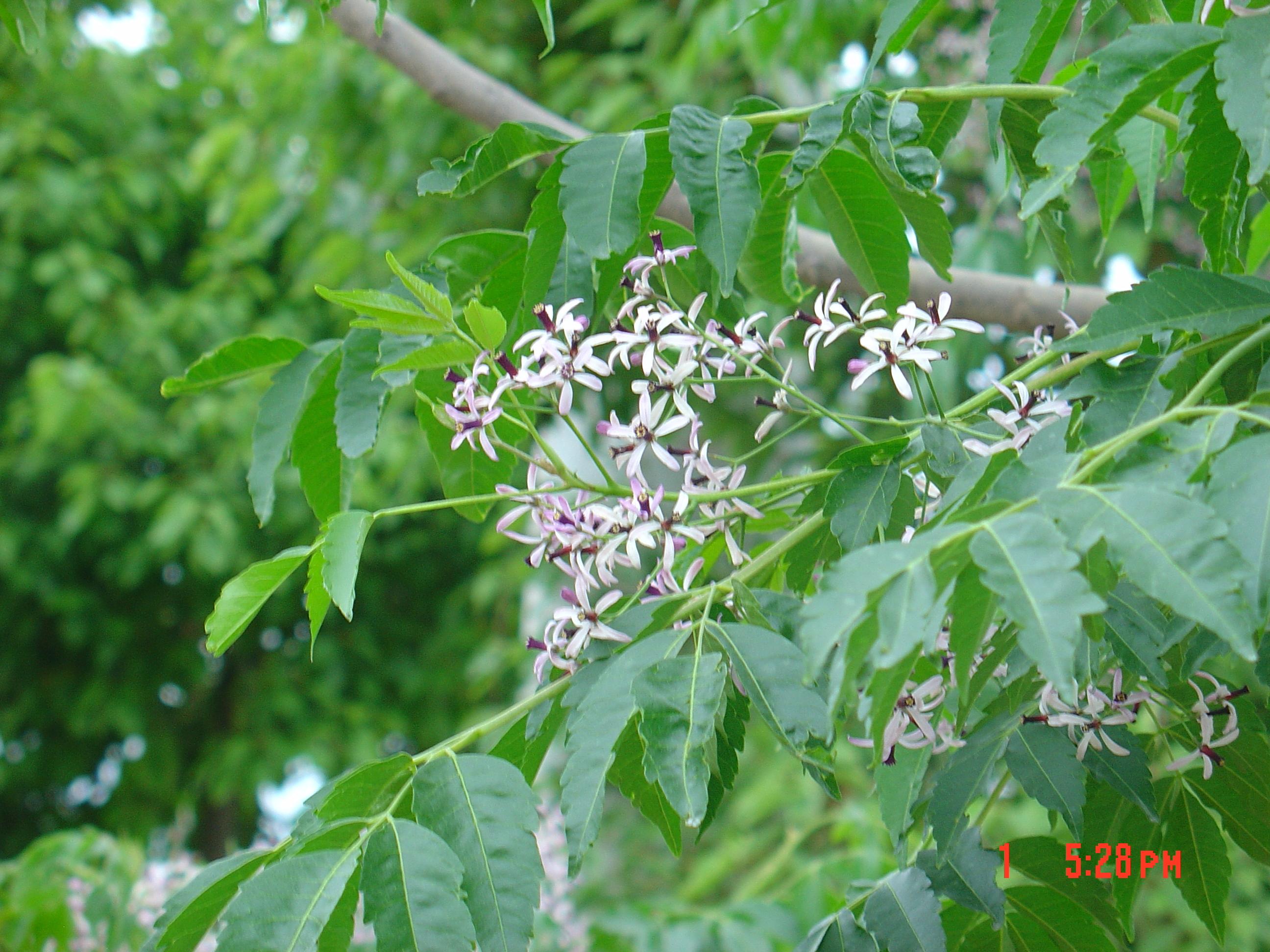
§ 0 § Wasabi Flower The bitter neem flower in late spring, with small white and purple flowers blooming in clusters, carries a unique bitter aroma and is often mentioned in ancient poetry as a late spring charm. This photo records the bitter neem flowers in late spring. Fine flowers with white as the base, their petal tips tinged with a faint purple, hanging in clusters on the branches, appearing particularly elegant among the bright green feather like compound leaves. The Chinese toon flower is one of the iconic flowers of late spring, as evidenced by the poem "Peach and plum blossoms fly away in front of the door, and spring light arrives at the toon flower". Its flowering period is short, but it carries a bitter yet resilient temperament. The Chinese toon tree is also a common tree species in rural areas. It blooms in early summer and bears round shaped Chinese toon seeds in autumn and winter, with a unique mountain and wild atmosphere throughout the plant.
§ 0 § Wasabi Flower The bitter neem flower in late spring, with small white and purple flowers blooming in clusters, carries a unique bitter aroma and is often mentioned in ancient poetry as a late spring charm. This photo records the bitter neem flowers in late spring. Fine flowers with white as the base, their petal tips tinged with a faint purple, hanging in clusters on the branches, appearing particularly elegant among the bright green feather like compound leaves. The Chinese toon flower is one of the iconic flowers of late spring, as evidenced by the poem "Peach and plum blossoms fly away in front of the door, and spring light arrives at the toon flower". Its flowering period is short, but it carries a bitter yet resilient temperament. The Chinese toon tree is also a common tree species in rural areas. It blooms in early summer and bears round shaped Chinese toon seeds in autumn and winter, with a unique mountain and wild atmosphere throughout the plant.
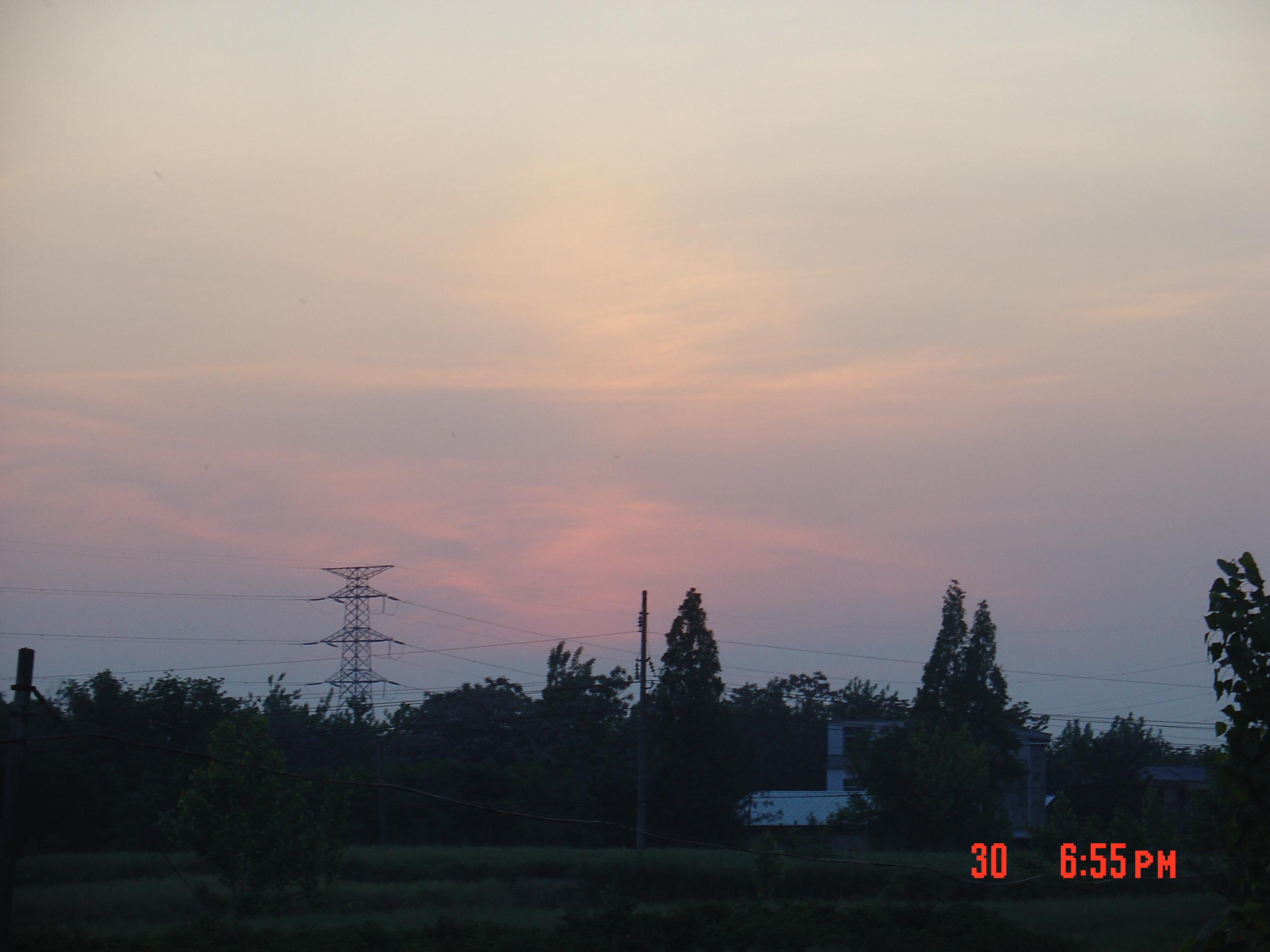
§ 0 § Rural Twilight The rural skyline in the evening, with light pink and yellow sunset reflecting the high-voltage tower and forest, is the most daily and gentle dusk. This photo captures the gentle moments of a rural evening. The sky gradually darkened, blending into a gradient of light pink and yellow, like a sunset shattered by the setting sun. The foreground is a layered silhouette of trees, and the high-voltage power tower standing in the distance becomes the most striking line, carrying a unique atmosphere of industrial and rural interweaving. The timestamp in the bottom right corner of the photo is "6:55 PM", which happens to be the quietest time of the day in the countryside. There is no hustle and bustle of the city, only the evening breeze, dusk, and gradually brightening lights. This is a beautiful moment that can be seen everywhere in ordinary rural areas but is worth cherishing.
§ 0 § Rural Twilight The rural skyline in the evening, with light pink and yellow sunset reflecting the high-voltage tower and forest, is the most daily and gentle dusk. This photo captures the gentle moments of a rural evening. The sky gradually darkened, blending into a gradient of light pink and yellow, like a sunset shattered by the setting sun. The foreground is a layered silhouette of trees, and the high-voltage power tower standing in the distance becomes the most striking line, carrying a unique atmosphere of industrial and rural interweaving. The timestamp in the bottom right corner of the photo is "6:55 PM", which happens to be the quietest time of the day in the countryside. There is no hustle and bustle of the city, only the evening breeze, dusk, and gradually brightening lights. This is a beautiful moment that can be seen everywhere in ordinary rural areas but is worth cherishing.
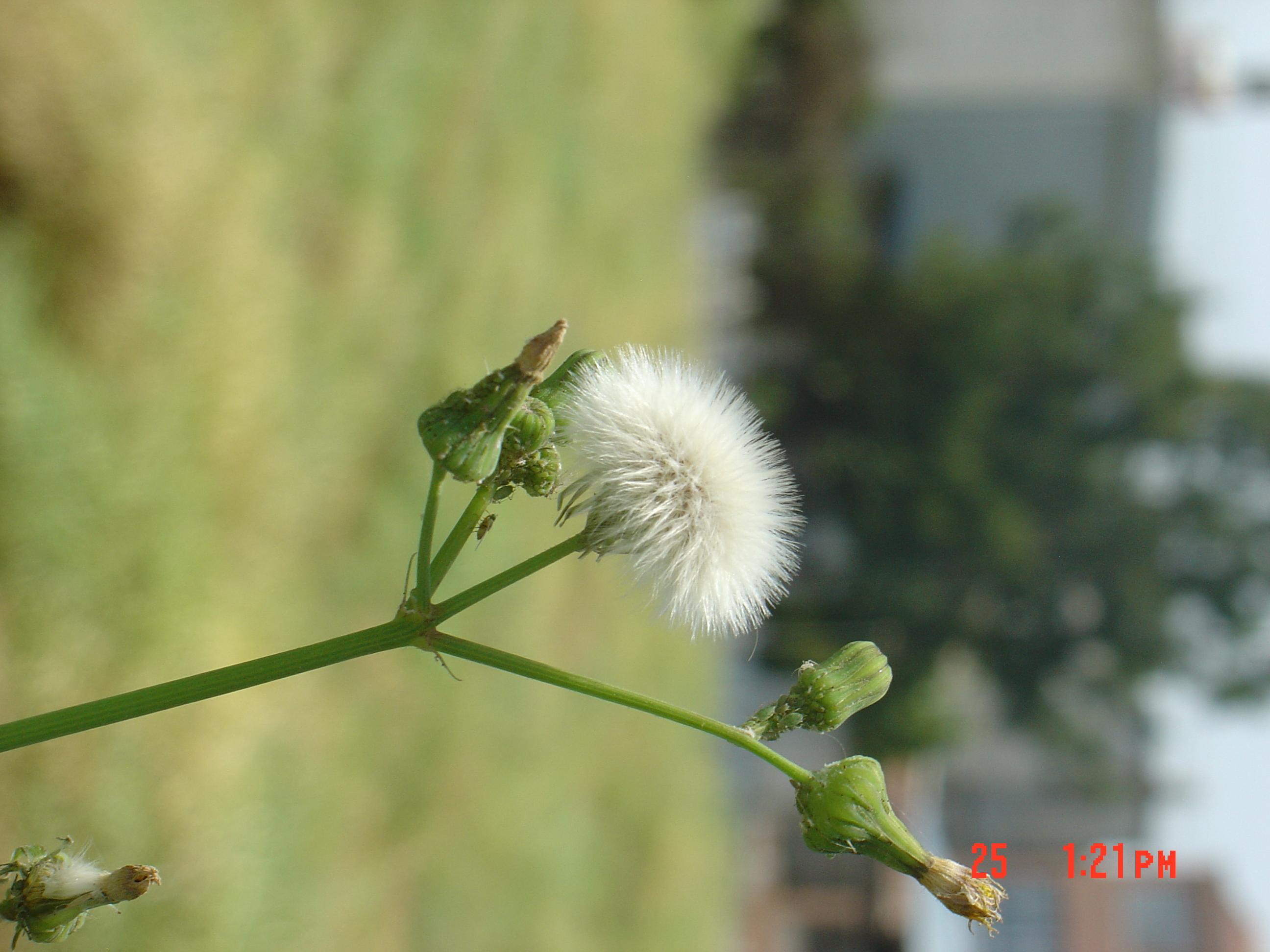
§ 0 § Dandelion The dandelion under the lens, with fluffy white fluffy balls on one side and green flower buds waiting to be placed on the other, captures the transition moment from flowering to sowing seeds. This photo records the two stages of dandelions: on one side is a mature, fluffy and white fluffy ball, which will float away with a gentle touch; On the other side are green flower buds that have not yet bloomed, carrying a green vitality. Dandelion is one of the most common and poetic wild grasses. Its fluffy balls are "parachutes" born for the wind, and each seed carries a light crown hair, flying towards the distance by the power of the wind and rooting and growing in new places. This close-up captures this ordinary yet powerful beauty in its entirety.
§ 0 § Dandelion The dandelion under the lens, with fluffy white fluffy balls on one side and green flower buds waiting to be placed on the other, captures the transition moment from flowering to sowing seeds. This photo records the two stages of dandelions: on one side is a mature, fluffy and white fluffy ball, which will float away with a gentle touch; On the other side are green flower buds that have not yet bloomed, carrying a green vitality. Dandelion is one of the most common and poetic wild grasses. Its fluffy balls are "parachutes" born for the wind, and each seed carries a light crown hair, flying towards the distance by the power of the wind and rooting and growing in new places. This close-up captures this ordinary yet powerful beauty in its entirety.
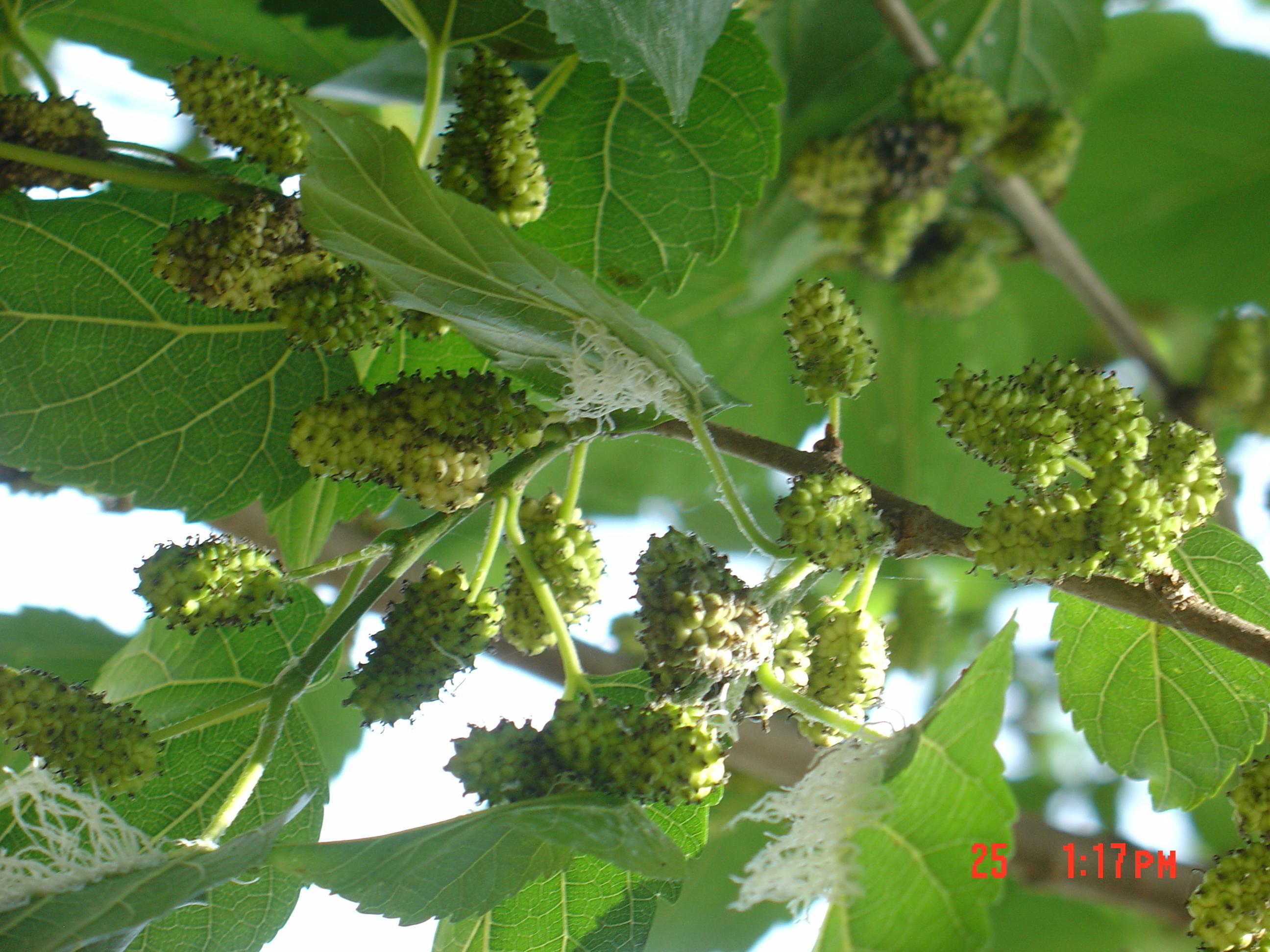
The chestnut tree in early summer This is a close-up of chestnut tree branches in early summer. The young chestnut fruits are green in color and still have spikes, wrapped in dense green leaves, which is a typical growth state of chestnut trees. This photo records the appearance of chestnut trees in early summer. In the picture, the green and green young fruits are immature chestnuts, wrapped in a spiky shell, like mini prickly balls, hanging on the branches. The leaves are the iconic form of chestnut trees: with sharp serrations on the edges, clear veins, thick texture, and full of vitality. These green chestnut fruits will wait until autumn, and the prickly shells will gradually turn yellow and crack, revealing the brown chestnut inside, which is the familiar nut. This touch of green in early summer is a harbinger of a bountiful autumn harvest.
The chestnut tree in early summer This is a close-up of chestnut tree branches in early summer. The young chestnut fruits are green in color and still have spikes, wrapped in dense green leaves, which is a typical growth state of chestnut trees. This photo records the appearance of chestnut trees in early summer. In the picture, the green and green young fruits are immature chestnuts, wrapped in a spiky shell, like mini prickly balls, hanging on the branches. The leaves are the iconic form of chestnut trees: with sharp serrations on the edges, clear veins, thick texture, and full of vitality. These green chestnut fruits will wait until autumn, and the prickly shells will gradually turn yellow and crack, revealing the brown chestnut inside, which is the familiar nut. This touch of green in early summer is a harbinger of a bountiful autumn harvest.
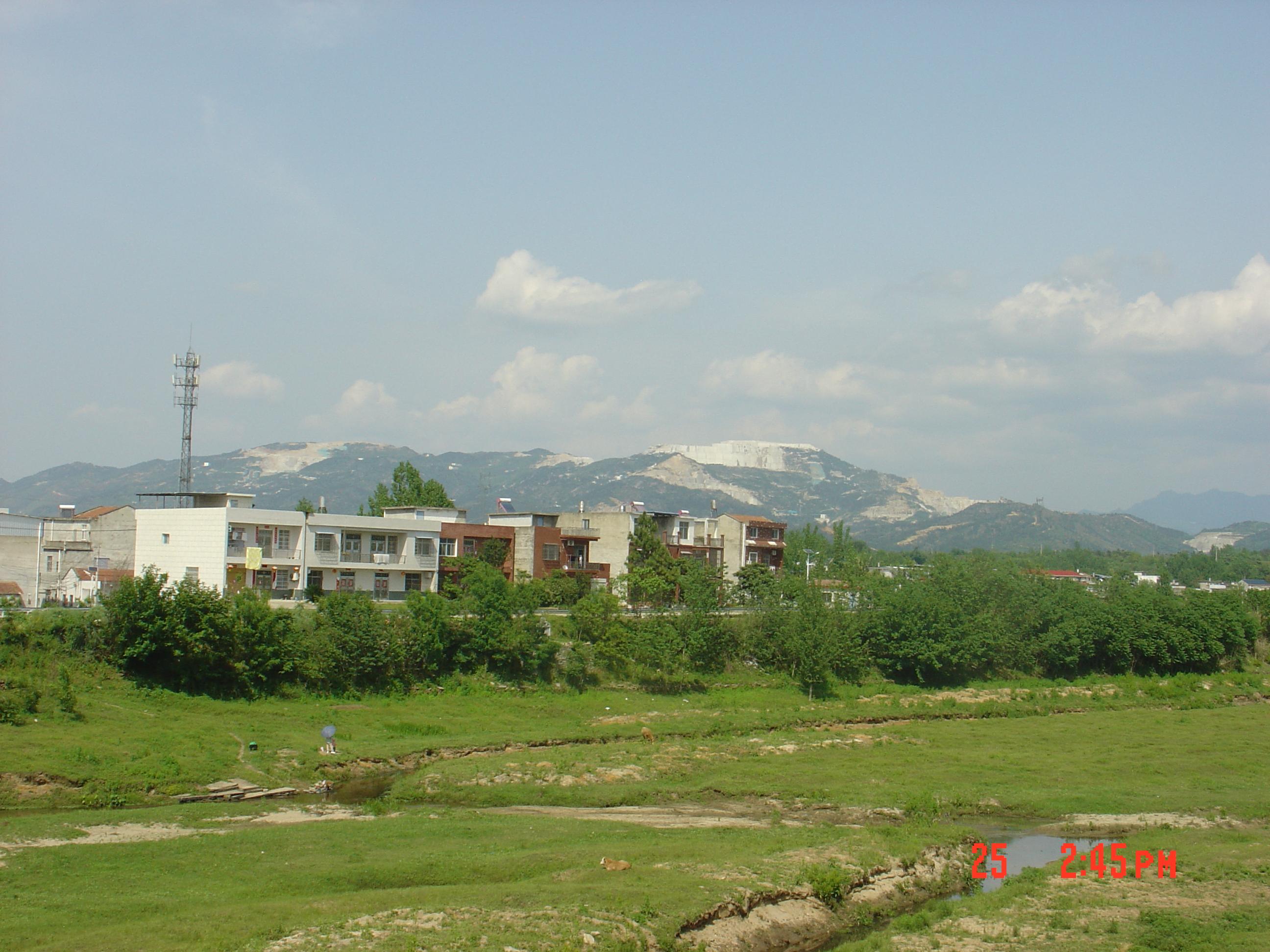
§ 0 § Baiyashan The dazzling white mountain in the distance of the camera is the Baiya Mountain located in Macheng, Huanggang, Hubei, which is also one of the largest single granite mines in China. Location: Baiyashan is located in Macheng City, Huanggang City, Hubei Province, in the southeast direction of Macheng City. It spans multiple towns and blocks including Guishan Town, Baiguo Town, and Nanhu Street in Macheng City. It is the core natural mountain in the central area of Macheng City and a well-known local landmark mountain in the surrounding areas. It is extremely close to Macheng City by car and has convenient transportation. It occupies an excellent location in the hinterland of Macheng City. The mountains are continuous and undulating, and the regional map is open. The overall orientation is surrounded by mountains and water. Relying on the local hilly and mountainous terrain of Macheng City, it forms a complete natural mountainous space. Looking at the entire hilly and mountainous area of eastern Hubei, it belongs to representative single large mountains, and surrounding villages are scattered. Surrounded by countryside, it is a natural mountainous area that combines natural scenery and local flavor, with a unique geographical location, It is also a typical representative of the local natural scenery of Macheng. The origin of the place name: Baiya Mountain, formerly known as Baizhen Mountain, has undergone thousands of years of place name evolution, gradually forming the current name Baiya Mountain. The origin of the place name combines historical records and local folk legends, with a profound cultural heritage. In historical records, this mountain was named after the Bai family, who lived there in ancient times. The mountain was named after a human surname, and many ancient place names are based on Bai Zhen Mountain. It is an ancient place name that has been passed down from ancient times to the present day in Macheng, and is clearly recorded in Macheng's local county annals and ancient geographical books. There is a gentle local legend circulating among the people. In ancient times, there were often white ducks inhabiting the mountains, wandering between clear springs and dense forests in the mountains all year round. The local people saw them every day and named them after the white duck intuitively. Through oral transmission and generations of inheritance, it was finally named Baiyashan. The name is simple and down-to-earth, full of the deep emotions of the local people towards this mountain. From ancient times to the present, the place name has been passed down and has never been changed. It is one of the most well preserved ancient mountain place names in Macheng. Geological Landform: Baiyashan is a natural granite mountain formed by millions of years of geological movements. It is a large-scale and geologically complete single granite mountain range in the eastern Hubei region, with a very long geological history. It has undergone multiple geological processes such as crustal movement, rock compression, weathering and erosion in ancient times, and finally formed the current majestic and heavy mountain appearance. The entire mountain has a majestic terrain, with continuous mountains and a moderate elevation of the main peak. The mountain is both gentle and steep, with a smooth outline and distinct layers of slopes. The rocks in the mountains are exposed, and the rock structure is compact. The core geological structure is high-quality granite, which has abundant reserves and fine, dense, and hard texture. It is a natural high-quality stone production area. The mountainous terrain is diverse, with steep cliffs, gentle slopes, deep valleys, natural crevices, and clear springs and gullies. The terrain types are rich, and the surface soil layer is thick and thin, with a stable natural geological structure. After thousands of years of wind and rain erosion, the original mountain style has been maintained without excessive human damage, and the original texture of natural geology has been fully preserved. It is highly representative in the geology of eastern Hubei. Historical background: Baiyashan has a rich history of thousands of years and has been an important historical landscape landmark in Macheng since ancient times. It has played a pivotal role in Macheng's millennium development process. For thousands of years, this mountain has silently guarded a region of soil and water, nourished the surrounding generations of people. Villagers have been working, resting, and living in seclusion in the mountains since ancient times, making it a natural home for the local people to survive. In ancient times, this was a great place for literati, literati, gentry, and scholars to climb high and express their feelings, and to appreciate the scenery and scenery. It left many local cultural imprints, and detailed records of Baiyashan can be found in local historical materials and genealogies of Macheng, witnessing the historical changes and cultural development of Macheng from ancient times to modern times. After the changes of dynasties, Baiyashan has always stood steadily, witnessing the rise of surrounding villages and the proliferation of local culture. It carries the local history and folk customs of Macheng, and is a historical nostalgia engraved in the bones of Macheng people. It is also an indispensable natural carrier for the inheritance of local history and culture, and has accumulated a strong local historical atmosphere. Natural ecology and style: Baiyashan is located in the subtropical humid monsoon climate zone, with distinct four seasons, mild climate, abundant rainfall, sufficient sunshine, pleasant climate all year round, and a peaceful and natural ecological environment. The vegetation growth in the mountains is vigorous, with extremely high vegetation coverage. Various local trees, shrubs, wildflowers, wild grasses, and green vines grow in the mountains. The vegetation changes seasons, with lush greenery in spring and summer, and gradually changing layers of forests in autumn and winter. The scenery is unique, with lush vegetation and fresh air in the mountains, and the natural environment is excellent in its original state. There are natural mountain springs flowing in the mountains all year round. The clear springs gurgle and the water quality is refreshing, inexhaustible all year round. They meander along the valleys and rock crevices, nourishing all things in the mountains and forming a beautiful natural scenery of clear springs, secluded valleys, and mountains and waters. Birds and animals inhabit the mountains, and all living things coexist. Everywhere is a natural beauty of the original ecology, without noise and disturbance. The mountains and waters blend together, creating a tranquil and peaceful atmosphere. Climbing high and looking into the distance, one can overlook the entire urban and rural area of Macheng, with a broad view of distant mountains and nearby waters. The scenery varies throughout the year, and each season has its own unique landscape, showcasing the simplicity and beauty of natural mountains and waters. Humanistic Folk Culture: Baiyashan is deeply rooted in the local folk culture of Macheng, and is an important carrier of Macheng's local folk customs and culture, embodying a strong cultural heritage of the eastern Hubei region. For thousands of years, the surrounding people have lived and relied on the mountains for a living, giving rise to unique mountain customs, living habits, and folk legends. All folk cultures are simple and pure, in line with the local people's lives, and are a true epitome of the local culture in eastern Hubei. This is an important part of Macheng's ancient landscape culture, belonging to the core area of Macheng's traditional ancient landscape. It has had famous natural scenery since ancient times and is revered by the locals as a place of spiritual beauty, deeply respected by the people. There are ancient cultural relics preserved in the mountains, which have undergone the baptism of time and still retain the ancient cultural atmosphere, carrying the spiritual beliefs and emotional sustenance of the local people. Every season, the surrounding people will spontaneously climb mountains, enjoy the scenery and go on outings, get close to nature, and integrate their reverence for mountains and waters and love for their homeland into their daily lives. They will pass down the cultural heritage and folk customs of Baiyashan from generation to generation, making it an inseparable part of Macheng's local culture and carrying the memories and emotional attachment of generations of Macheng people. Overall style and value: Baiyashan is a natural mountainous area that integrates natural geology, ecological scenery, historical culture, and local customs. It is not only an iconic natural landmark of Macheng, but also a model of the integration of local culture and nature. Without excessive commercial development, it has always preserved its simple and authentic appearance, perfectly integrating mountains, waters, culture, history, and geography. It has unique natural endowments and profound cultural heritage, and is a highly distinctive and recognizable natural mountainous area in Macheng. It not only nourishes the local soil and people, but also carries the cultural roots and local sentiment of Macheng for thousands of years. It is an irreplaceable hometown landscape in the hearts of Macheng people. The overall style is primitive and down-to-earth, with rich cultural connotations and serene natural scenery. It fully displays the unique style and charm of the eastern Hubei mountainous area, and is the most representative and smoky natural mountain in Macheng.
§ 0 § Baiyashan The dazzling white mountain in the distance of the camera is the Baiya Mountain located in Macheng, Huanggang, Hubei, which is also one of the largest single granite mines in China. Location: Baiyashan is located in Macheng City, Huanggang City, Hubei Province, in the southeast direction of Macheng City. It spans multiple towns and blocks including Guishan Town, Baiguo Town, and Nanhu Street in Macheng City. It is the core natural mountain in the central area of Macheng City and a well-known local landmark mountain in the surrounding areas. It is extremely close to Macheng City by car and has convenient transportation. It occupies an excellent location in the hinterland of Macheng City. The mountains are continuous and undulating, and the regional map is open. The overall orientation is surrounded by mountains and water. Relying on the local hilly and mountainous terrain of Macheng City, it forms a complete natural mountainous space. Looking at the entire hilly and mountainous area of eastern Hubei, it belongs to representative single large mountains, and surrounding villages are scattered. Surrounded by countryside, it is a natural mountainous area that combines natural scenery and local flavor, with a unique geographical location, It is also a typical representative of the local natural scenery of Macheng. The origin of the place name: Baiya Mountain, formerly known as Baizhen Mountain, has undergone thousands of years of place name evolution, gradually forming the current name Baiya Mountain. The origin of the place name combines historical records and local folk legends, with a profound cultural heritage. In historical records, this mountain was named after the Bai family, who lived there in ancient times. The mountain was named after a human surname, and many ancient place names are based on Bai Zhen Mountain. It is an ancient place name that has been passed down from ancient times to the present day in Macheng, and is clearly recorded in Macheng's local county annals and ancient geographical books. There is a gentle local legend circulating among the people. In ancient times, there were often white ducks inhabiting the mountains, wandering between clear springs and dense forests in the mountains all year round. The local people saw them every day and named them after the white duck intuitively. Through oral transmission and generations of inheritance, it was finally named Baiyashan. The name is simple and down-to-earth, full of the deep emotions of the local people towards this mountain. From ancient times to the present, the place name has been passed down and has never been changed. It is one of the most well preserved ancient mountain place names in Macheng. Geological Landform: Baiyashan is a natural granite mountain formed by millions of years of geological movements. It is a large-scale and geologically complete single granite mountain range in the eastern Hubei region, with a very long geological history. It has undergone multiple geological processes such as crustal movement, rock compression, weathering and erosion in ancient times, and finally formed the current majestic and heavy mountain appearance. The entire mountain has a majestic terrain, with continuous mountains and a moderate elevation of the main peak. The mountain is both gentle and steep, with a smooth outline and distinct layers of slopes. The rocks in the mountains are exposed, and the rock structure is compact. The core geological structure is high-quality granite, which has abundant reserves and fine, dense, and hard texture. It is a natural high-quality stone production area. The mountainous terrain is diverse, with steep cliffs, gentle slopes, deep valleys, natural crevices, and clear springs and gullies. The terrain types are rich, and the surface soil layer is thick and thin, with a stable natural geological structure. After thousands of years of wind and rain erosion, the original mountain style has been maintained without excessive human damage, and the original texture of natural geology has been fully preserved. It is highly representative in the geology of eastern Hubei. Historical background: Baiyashan has a rich history of thousands of years and has been an important historical landscape landmark in Macheng since ancient times. It has played a pivotal role in Macheng's millennium development process. For thousands of years, this mountain has silently guarded a region of soil and water, nourished the surrounding generations of people. Villagers have been working, resting, and living in seclusion in the mountains since ancient times, making it a natural home for the local people to survive. In ancient times, this was a great place for literati, literati, gentry, and scholars to climb high and express their feelings, and to appreciate the scenery and scenery. It left many local cultural imprints, and detailed records of Baiyashan can be found in local historical materials and genealogies of Macheng, witnessing the historical changes and cultural development of Macheng from ancient times to modern times. After the changes of dynasties, Baiyashan has always stood steadily, witnessing the rise of surrounding villages and the proliferation of local culture. It carries the local history and folk customs of Macheng, and is a historical nostalgia engraved in the bones of Macheng people. It is also an indispensable natural carrier for the inheritance of local history and culture, and has accumulated a strong local historical atmosphere. Natural ecology and style: Baiyashan is located in the subtropical humid monsoon climate zone, with distinct four seasons, mild climate, abundant rainfall, sufficient sunshine, pleasant climate all year round, and a peaceful and natural ecological environment. The vegetation growth in the mountains is vigorous, with extremely high vegetation coverage. Various local trees, shrubs, wildflowers, wild grasses, and green vines grow in the mountains. The vegetation changes seasons, with lush greenery in spring and summer, and gradually changing layers of forests in autumn and winter. The scenery is unique, with lush vegetation and fresh air in the mountains, and the natural environment is excellent in its original state. There are natural mountain springs flowing in the mountains all year round. The clear springs gurgle and the water quality is refreshing, inexhaustible all year round. They meander along the valleys and rock crevices, nourishing all things in the mountains and forming a beautiful natural scenery of clear springs, secluded valleys, and mountains and waters. Birds and animals inhabit the mountains, and all living things coexist. Everywhere is a natural beauty of the original ecology, without noise and disturbance. The mountains and waters blend together, creating a tranquil and peaceful atmosphere. Climbing high and looking into the distance, one can overlook the entire urban and rural area of Macheng, with a broad view of distant mountains and nearby waters. The scenery varies throughout the year, and each season has its own unique landscape, showcasing the simplicity and beauty of natural mountains and waters. Humanistic Folk Culture: Baiyashan is deeply rooted in the local folk culture of Macheng, and is an important carrier of Macheng's local folk customs and culture, embodying a strong cultural heritage of the eastern Hubei region. For thousands of years, the surrounding people have lived and relied on the mountains for a living, giving rise to unique mountain customs, living habits, and folk legends. All folk cultures are simple and pure, in line with the local people's lives, and are a true epitome of the local culture in eastern Hubei. This is an important part of Macheng's ancient landscape culture, belonging to the core area of Macheng's traditional ancient landscape. It has had famous natural scenery since ancient times and is revered by the locals as a place of spiritual beauty, deeply respected by the people. There are ancient cultural relics preserved in the mountains, which have undergone the baptism of time and still retain the ancient cultural atmosphere, carrying the spiritual beliefs and emotional sustenance of the local people. Every season, the surrounding people will spontaneously climb mountains, enjoy the scenery and go on outings, get close to nature, and integrate their reverence for mountains and waters and love for their homeland into their daily lives. They will pass down the cultural heritage and folk customs of Baiyashan from generation to generation, making it an inseparable part of Macheng's local culture and carrying the memories and emotional attachment of generations of Macheng people. Overall style and value: Baiyashan is a natural mountainous area that integrates natural geology, ecological scenery, historical culture, and local customs. It is not only an iconic natural landmark of Macheng, but also a model of the integration of local culture and nature. Without excessive commercial development, it has always preserved its simple and authentic appearance, perfectly integrating mountains, waters, culture, history, and geography. It has unique natural endowments and profound cultural heritage, and is a highly distinctive and recognizable natural mountainous area in Macheng. It not only nourishes the local soil and people, but also carries the cultural roots and local sentiment of Macheng for thousands of years. It is an irreplaceable hometown landscape in the hearts of Macheng people. The overall style is primitive and down-to-earth, with rich cultural connotations and serene natural scenery. It fully displays the unique style and charm of the eastern Hubei mountainous area, and is the most representative and smoky natural mountain in Macheng.
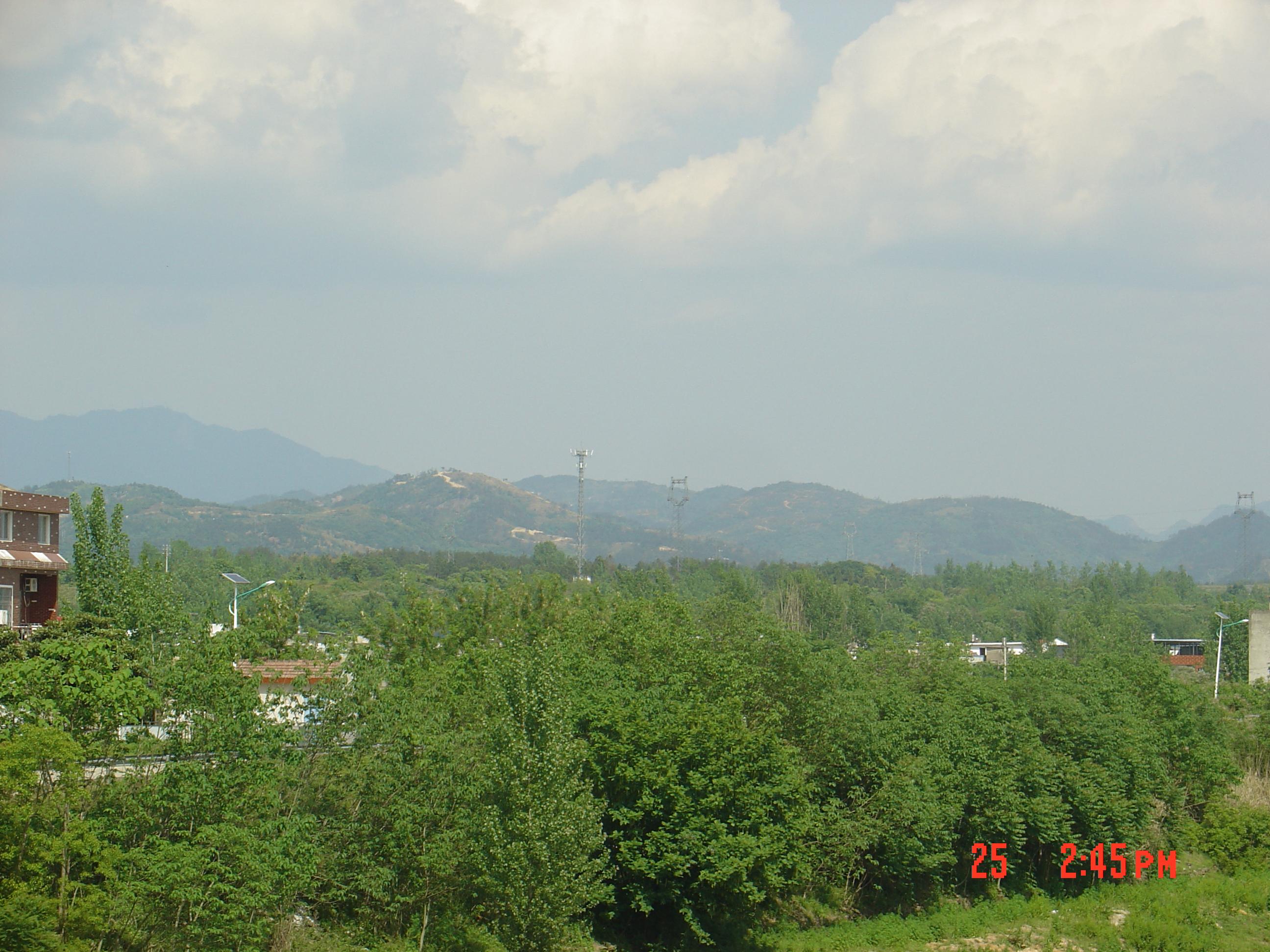
Mist spreads over the green mountains, wind blows through the treetops The distant mountains are shrouded in a thin mist, while the nearby trees are shining green. There is no noise, only the gentle sound of the wind blowing through the leaves, and the gentle contours of the distant mountains.
Mist spreads over the green mountains, wind blows through the treetops The distant mountains are shrouded in a thin mist, while the nearby trees are shining green. There is no noise, only the gentle sound of the wind blowing through the leaves, and the gentle contours of the distant mountains.
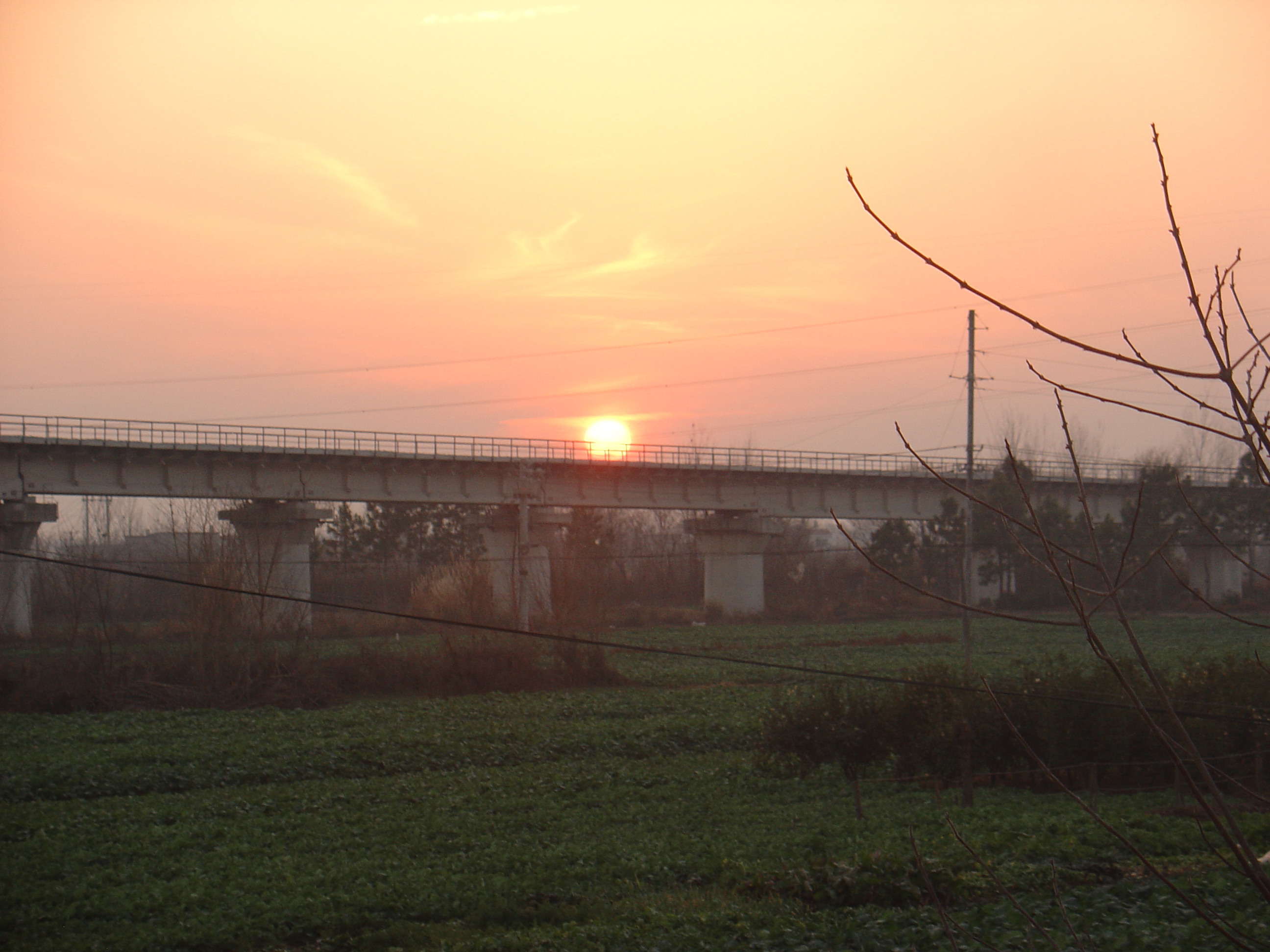
The sunset at the end of the track The orange red sunset sank towards the end of the railway bridge, dyeing the sky a gentle orange. The fields, withered branches, and elevated bridges are all immersed in the warm twilight, with the tranquility and relaxation of the countryside carried by the wind. The most healing dusk is never in the noisy city.
The sunset at the end of the track The orange red sunset sank towards the end of the railway bridge, dyeing the sky a gentle orange. The fields, withered branches, and elevated bridges are all immersed in the warm twilight, with the tranquility and relaxation of the countryside carried by the wind. The most healing dusk is never in the noisy city.
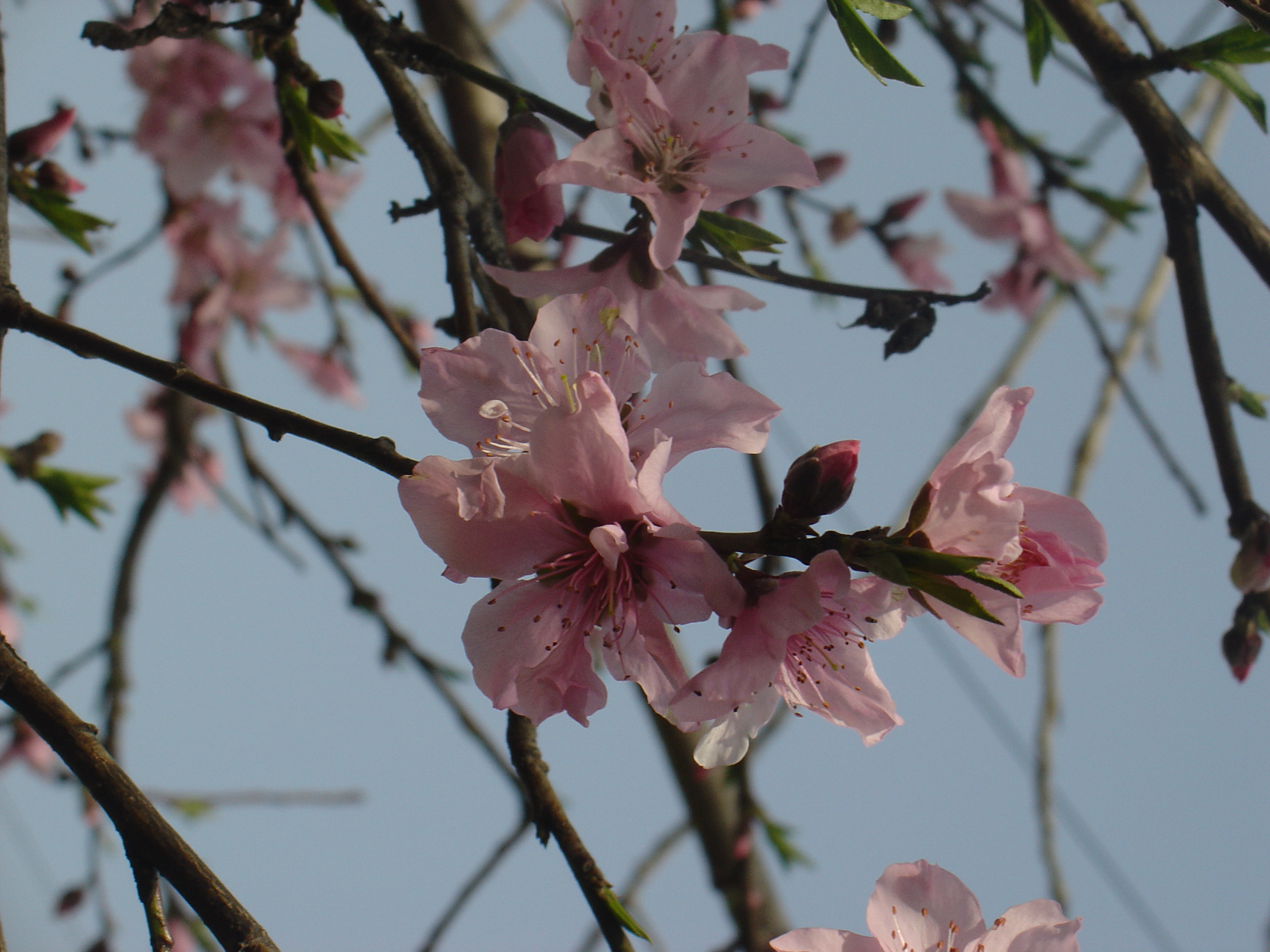
§ 0 § Peach Blossoms When the east wind blows, peach blossoms bloom. The pink and white petals are like clouds that have been kneaded, with a hint of spring softness, quietly spreading among the branches. The sunshine passes through the petals, and even the wind is enveloped in a gentle scent. This is probably the most touching appearance of spring.
§ 0 § Peach Blossoms When the east wind blows, peach blossoms bloom. The pink and white petals are like clouds that have been kneaded, with a hint of spring softness, quietly spreading among the branches. The sunshine passes through the petals, and even the wind is enveloped in a gentle scent. This is probably the most touching appearance of spring.
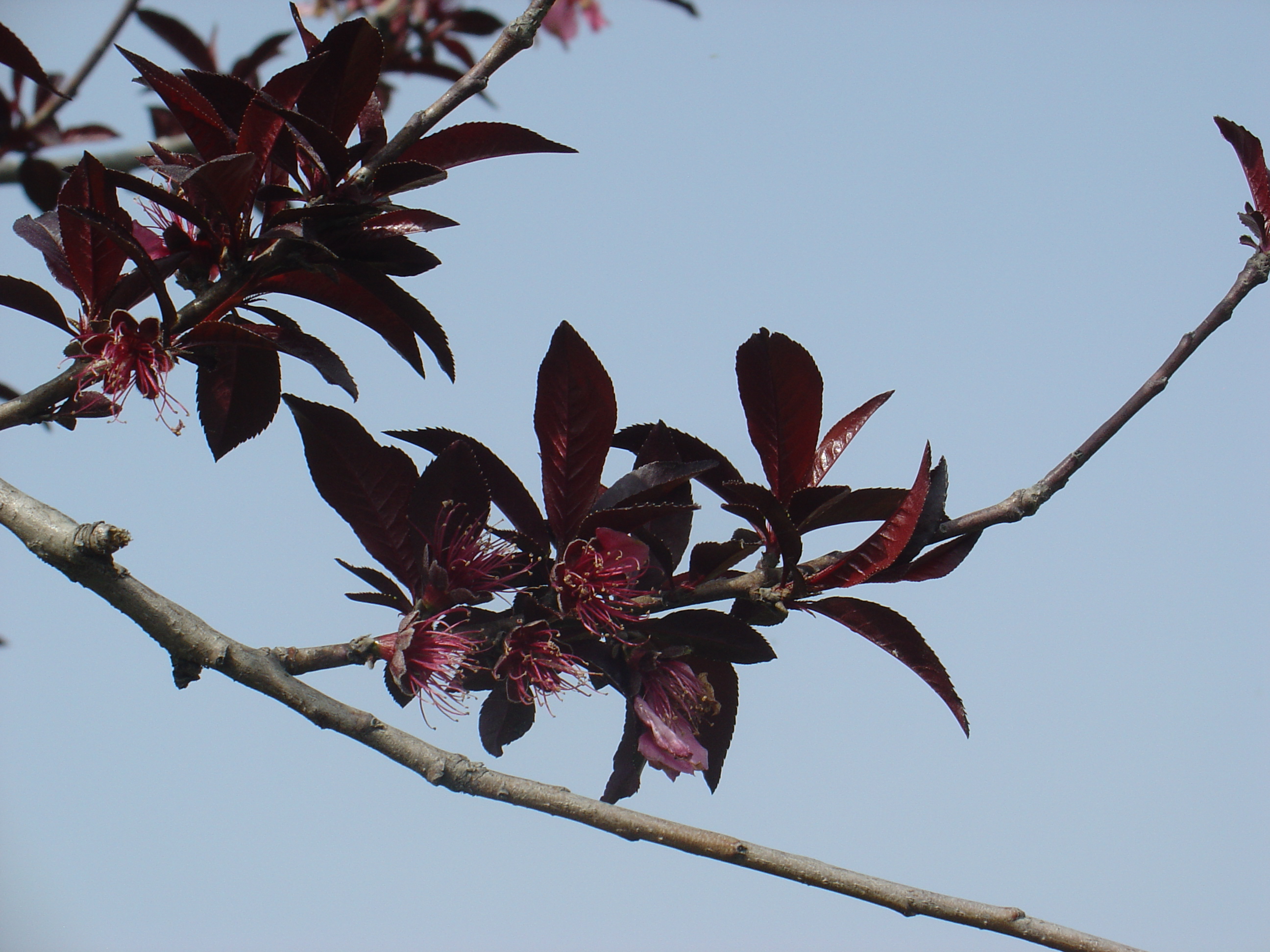
§ 0 § Red Flower The collision of deep red leaves and pink flowers is a rare and intense romance in spring. Red like burning leaves, pink like hidden spring, with a striking contrast. The flowers of Purple Leaf Plum quietly bloom in the deep red leaves, warm and quiet.
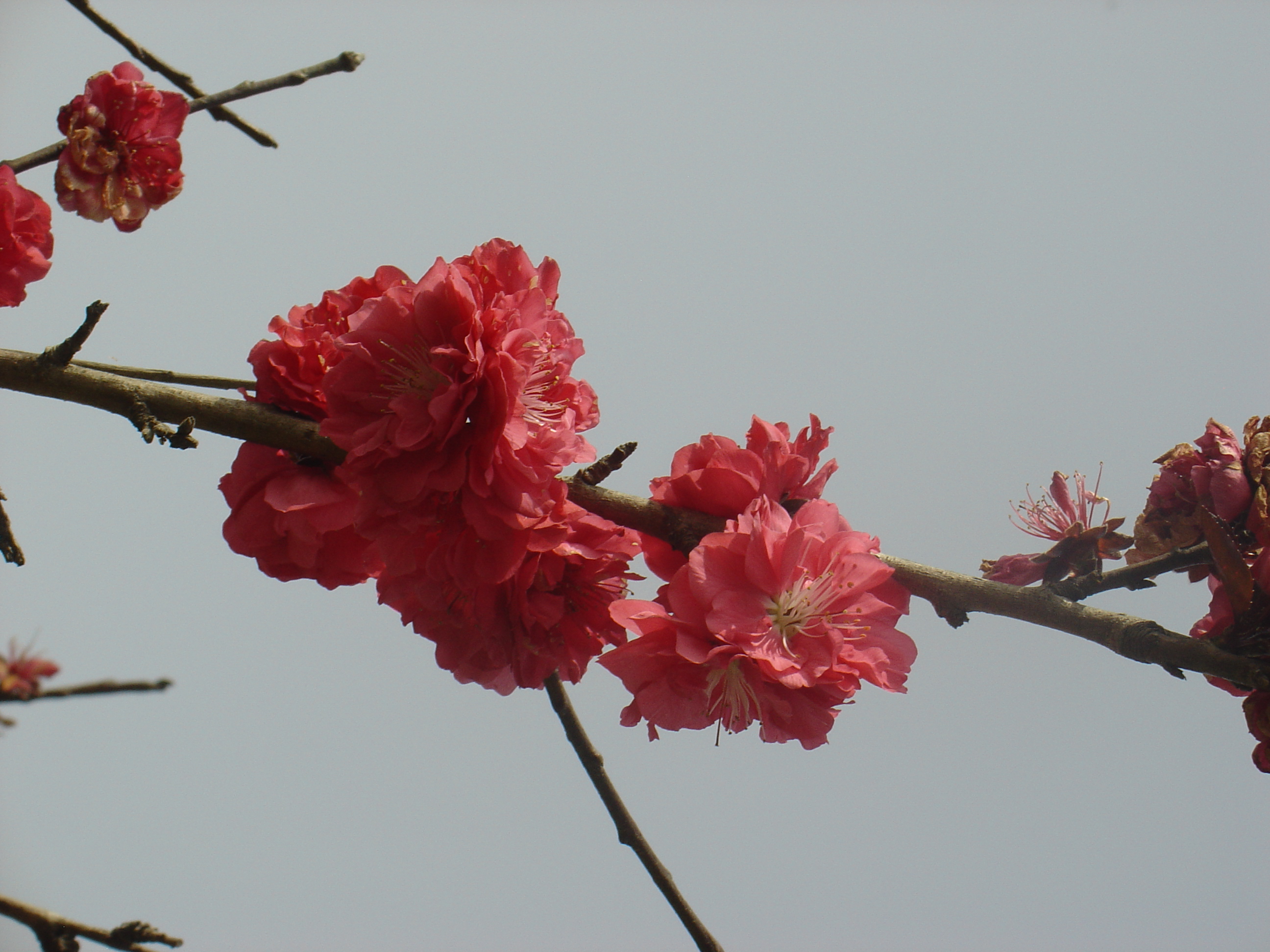
The branches are full of red flowers, like spring rouge shining on the branches, bright and lively. Double petaled peach blossoms/green peaches are in full bloom, each one carrying the passion of spring. A whole branch of red blooms the vitality of spring under the sunshine.
§ 0 § Red Flower The collision of deep red leaves and pink flowers is a rare and intense romance in spring. Red like burning leaves, pink like hidden spring, with a striking contrast. The flowers of Purple Leaf Plum quietly bloom in the deep red leaves, warm and quiet.
§ 0 § Red Flower The collision of deep red leaves and pink flowers is a rare and intense romance in spring. Red like burning leaves, pink like hidden spring, with a striking contrast. The flowers of Purple Leaf Plum quietly bloom in the deep red leaves, warm and quiet.
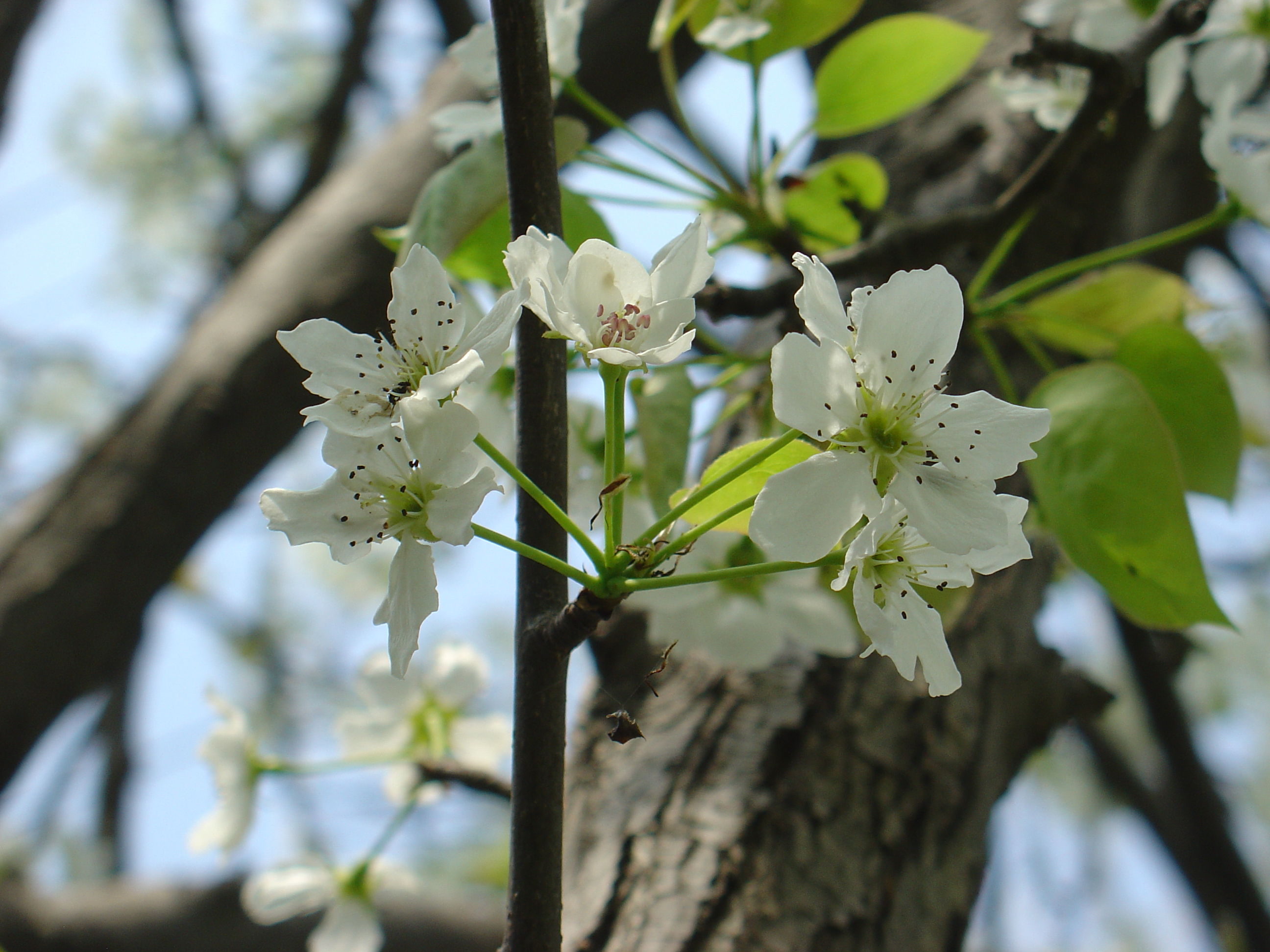
§ 0 § Pear Blossom Pear blossoms cover the branches, and when the wind blows, fine white drops fall, like a light snowfall in spring. Full of pear blossoms, blooming the tenderness of spring on the branches. A pear blossom is a letter written by spring to the sky, clean and bright. The spring breeze gently spreads over the branches, and a tree of pear blossoms quietly welcomes the season of blooming. The petals, as pure as jade, are warm and transparent, so clean that there is no trace of color. Clusters of them are scattered among the branches, and from a distance, they look like piles of snow on the branches. They are elegant and free from worldly extravagance. The delicate yellow stamen is hidden in the center of the petals, exquisite and delicate, adding a touch of vitality to the pure white flowers. The faint floral fragrance is light and long-lasting, slowly drifting with the wind, not strong or ostentatious, only lingering in the air with a gentle scent. Pear blossoms never compete for the beauty of spring flowers, nor do they compete with peach and plum blossoms for spring colors. They stand alone in front of the forest with a pure white body, carrying their own elegant and cold demeanor. They hide the gentlest and cleanest atmosphere of spring in this tree of pure white flowers.
The sunshine passes through the pear blossoms, and every petal shines with light, making it the gentlest form of spring. The pear blossoms on the branches are like clouds falling on the branches, too light to touch. The wind is filled with the fragrance of pear blossoms, and looking up reveals the tenderness of the entire spring season. In spring, the warm sun shines lightly, and the pear blossoms bloom layer by layer on the trees. The lush and dense white flowers cluster on the branches, complementing the tender green leaves that have just sprouted. The shadows of blue and white flowers intertwine, creating a leisurely and beautiful atmosphere. The flower branches stretch freely and are arranged in a staggered manner, with flowers densely packed and covering the entire tree, like clouds or snow, with a pure and tranquil spring scenery at a glance. It does not have rich and colorful colors, nor does it have a graceful and luxurious posture. It only relies on its elegant and plain white body, swaying quietly in the spring breeze. A gentle breeze brushes over the flower branches, causing the petals to flutter gently. Occasionally, small petals slowly fall with the wind, gentle and romantic. It embodies both the fresh and natural spirit of the mountains and the classical and gentle charm of literati, silently decorating the spring scenery of the world.
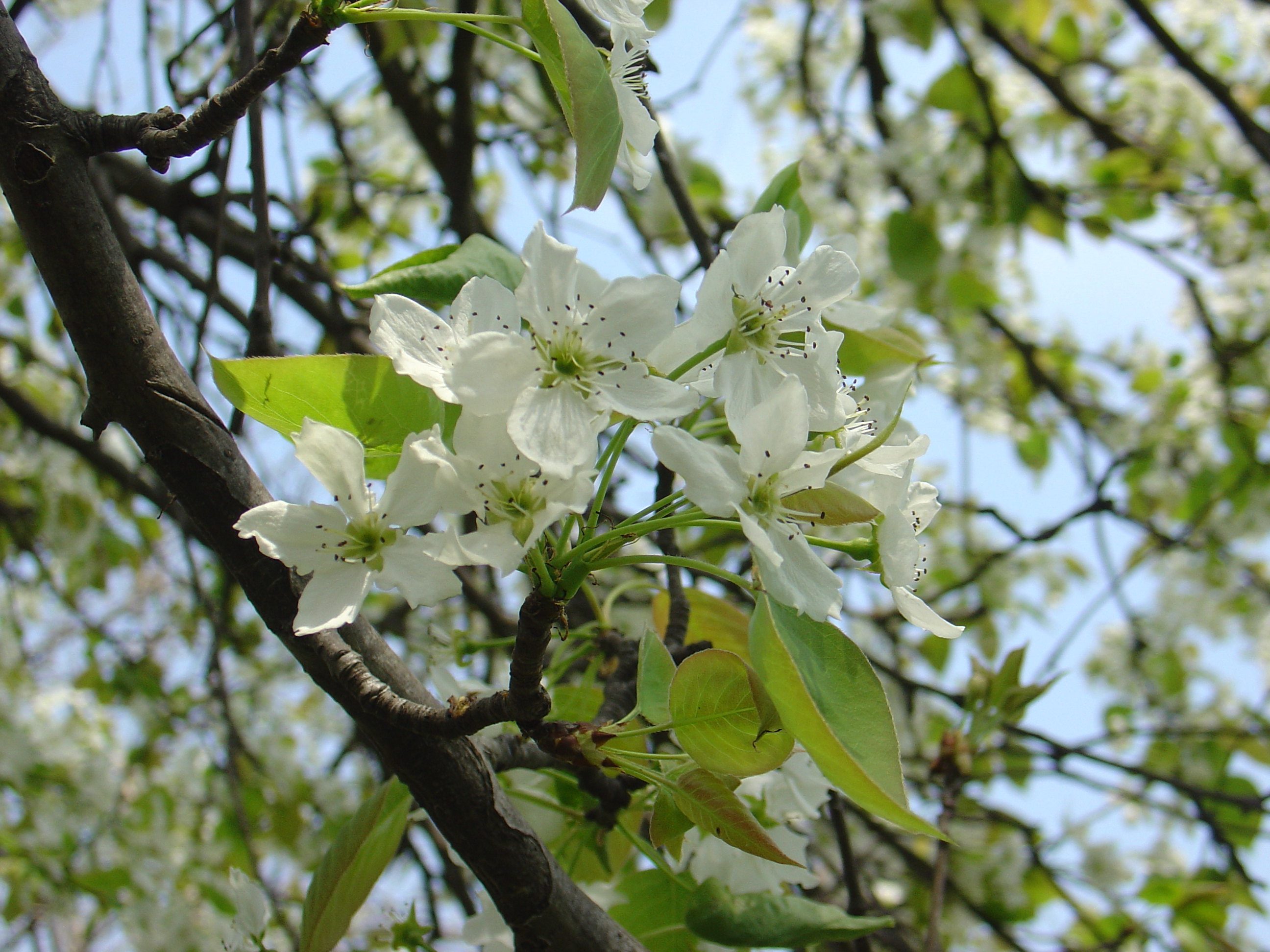
§ 0 § Pear Blossom Pear blossoms cover the branches, and when the wind blows, fine white drops fall, like a light snowfall in spring. Full of pear blossoms, blooming the tenderness of spring on the branches. A pear blossom is a letter written by spring to the sky, clean and bright. The spring breeze gently spreads over the branches, and a tree of pear blossoms quietly welcomes the season of blooming. The petals, as pure as jade, are warm and transparent, so clean that there is no trace of color. Clusters of them are scattered among the branches, and from a distance, they look like piles of snow on the branches. They are elegant and free from worldly extravagance. The delicate yellow stamen is hidden in the center of the petals, exquisite and delicate, adding a touch of vitality to the pure white flowers. The faint floral fragrance is light and long-lasting, slowly drifting with the wind, not strong or ostentatious, only lingering in the air with a gentle scent. Pear blossoms never compete for the beauty of spring flowers, nor do they compete with peach and plum blossoms for spring colors. They stand alone in front of the forest with a pure white body, carrying their own elegant and cold demeanor. They hide the gentlest and cleanest atmosphere of spring in this tree of pure white flowers.
§ 0 § Pear Blossom Pear blossoms cover the branches, and when the wind blows, fine white drops fall, like a light snowfall in spring. Full of pear blossoms, blooming the tenderness of spring on the branches. A pear blossom is a letter written by spring to the sky, clean and bright. The spring breeze gently spreads over the branches, and a tree of pear blossoms quietly welcomes the season of blooming. The petals, as pure as jade, are warm and transparent, so clean that there is no trace of color. Clusters of them are scattered among the branches, and from a distance, they look like piles of snow on the branches. They are elegant and free from worldly extravagance. The delicate yellow stamen is hidden in the center of the petals, exquisite and delicate, adding a touch of vitality to the pure white flowers. The faint floral fragrance is light and long-lasting, slowly drifting with the wind, not strong or ostentatious, only lingering in the air with a gentle scent. Pear blossoms never compete for the beauty of spring flowers, nor do they compete with peach and plum blossoms for spring colors. They stand alone in front of the forest with a pure white body, carrying their own elegant and cold demeanor. They hide the gentlest and cleanest atmosphere of spring in this tree of pure white flowers.
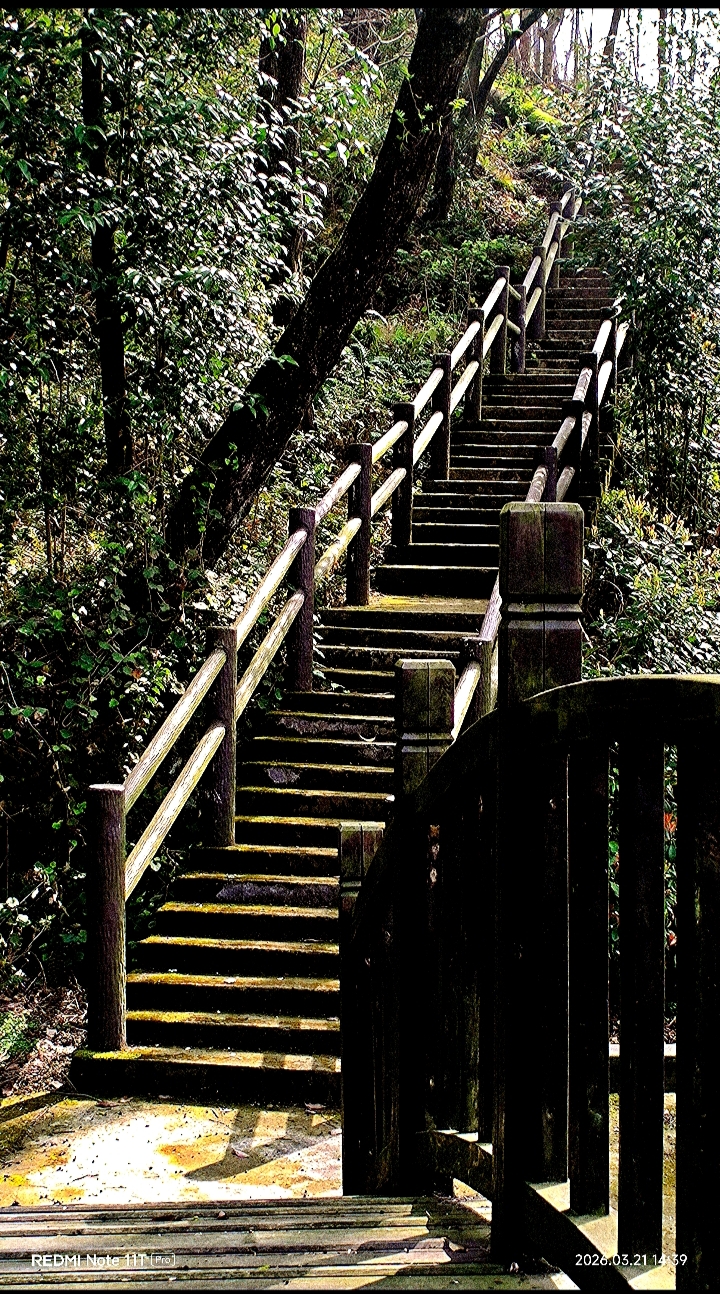
§ 0 § Wooden staircase Moss covered the stone steps, sunlight seeped through the leaves, and every step stepped on the soft cotton of spring. The old stone steps hide stories in the forest, and moss is the gentle trace left by time. The deserted forest path, with stone steps covered in moss, hides the quiet spring.
§ 0 § Wooden staircase Moss covered the stone steps, sunlight seeped through the leaves, and every step stepped on the soft cotton of spring. The old stone steps hide stories in the forest, and moss is the gentle trace left by time. The deserted forest path, with stone steps covered in moss, hides the quiet spring.