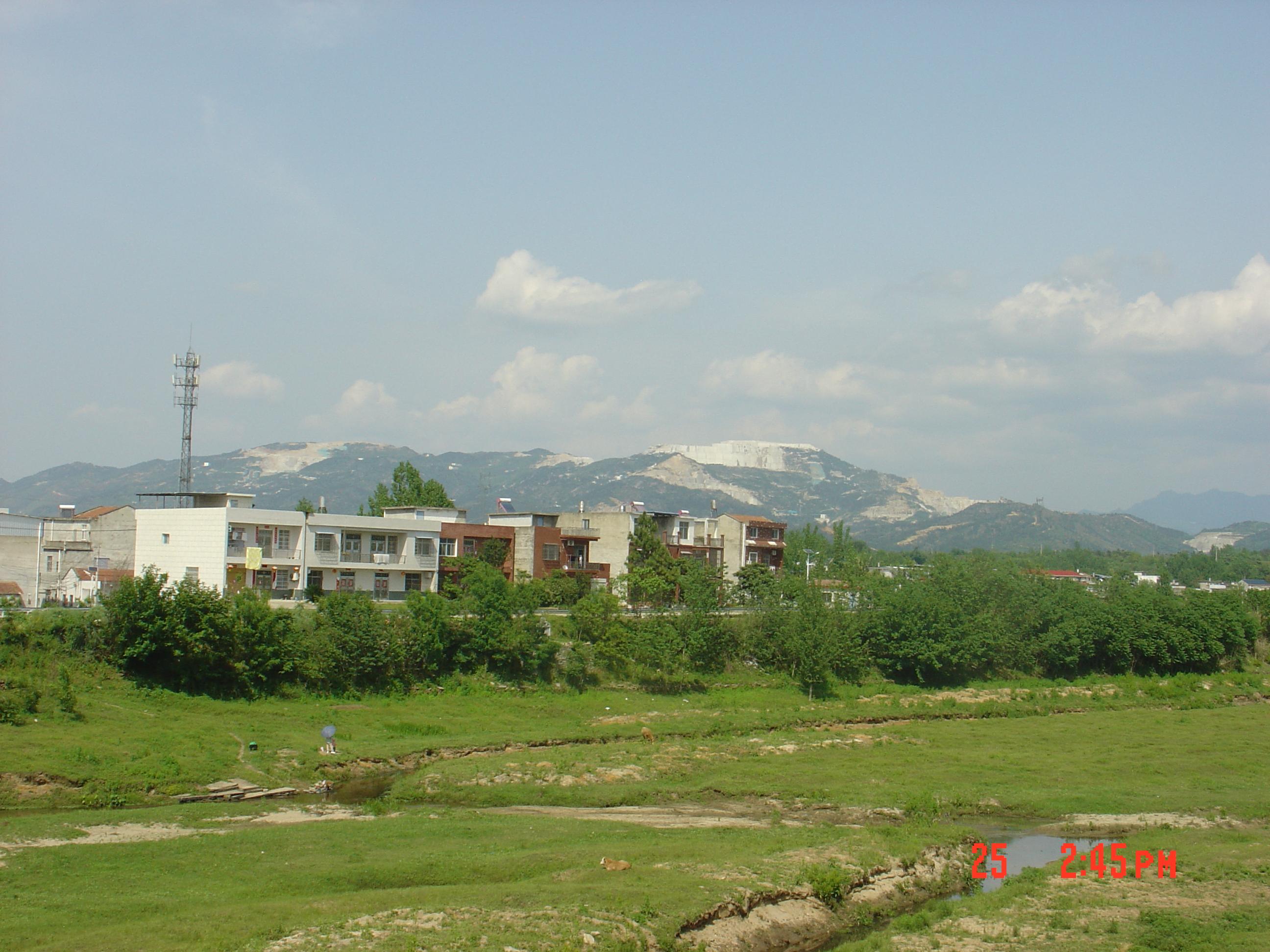
§ 0 § Baiyashan The dazzling white mountain in the distance of the camera is the Baiya Mountain located in Macheng, Huanggang, Hubei, which is also one of the largest single granite mines in China. Location: Baiyashan is located in Macheng City, Huanggang City, Hubei Province, in the southeast direction of Macheng City. It spans multiple towns and blocks including Guishan Town, Baiguo Town, and Nanhu Street in Macheng City. It is the core natural mountain in the central area of Macheng City and a well-known local landmark mountain in the surrounding areas. It is extremely close to Macheng City by car and has convenient transportation. It occupies an excellent location in the hinterland of Macheng City. The mountains are continuous and undulating, and the regional map is open. The overall orientation is surrounded by mountains and water. Relying on the local hilly and mountainous terrain of Macheng City, it forms a complete natural mountainous space. Looking at the entire hilly and mountainous area of eastern Hubei, it belongs to representative single large mountains, and surrounding villages are scattered. Surrounded by countryside, it is a natural mountainous area that combines natural scenery and local flavor, with a unique geographical location, It is also a typical representative of the local natural scenery of Macheng. The origin of the place name: Baiya Mountain, formerly known as Baizhen Mountain, has undergone thousands of years of place name evolution, gradually forming the current name Baiya Mountain. The origin of the place name combines historical records and local folk legends, with a profound cultural heritage. In historical records, this mountain was named after the Bai family, who lived there in ancient times. The mountain was named after a human surname, and many ancient place names are based on Bai Zhen Mountain. It is an ancient place name that has been passed down from ancient times to the present day in Macheng, and is clearly recorded in Macheng's local county annals and ancient geographical books. There is a gentle local legend circulating among the people. In ancient times, there were often white ducks inhabiting the mountains, wandering between clear springs and dense forests in the mountains all year round. The local people saw them every day and named them after the white duck intuitively. Through oral transmission and generations of inheritance, it was finally named Baiyashan. The name is simple and down-to-earth, full of the deep emotions of the local people towards this mountain. From ancient times to the present, the place name has been passed down and has never been changed. It is one of the most well preserved ancient mountain place names in Macheng. Geological Landform: Baiyashan is a natural granite mountain formed by millions of years of geological movements. It is a large-scale and geologically complete single granite mountain range in the eastern Hubei region, with a very long geological history. It has undergone multiple geological processes such as crustal movement, rock compression, weathering and erosion in ancient times, and finally formed the current majestic and heavy mountain appearance. The entire mountain has a majestic terrain, with continuous mountains and a moderate elevation of the main peak. The mountain is both gentle and steep, with a smooth outline and distinct layers of slopes. The rocks in the mountains are exposed, and the rock structure is compact. The core geological structure is high-quality granite, which has abundant reserves and fine, dense, and hard texture. It is a natural high-quality stone production area. The mountainous terrain is diverse, with steep cliffs, gentle slopes, deep valleys, natural crevices, and clear springs and gullies. The terrain types are rich, and the surface soil layer is thick and thin, with a stable natural geological structure. After thousands of years of wind and rain erosion, the original mountain style has been maintained without excessive human damage, and the original texture of natural geology has been fully preserved. It is highly representative in the geology of eastern Hubei. Historical background: Baiyashan has a rich history of thousands of years and has been an important historical landscape landmark in Macheng since ancient times. It has played a pivotal role in Macheng's millennium development process. For thousands of years, this mountain has silently guarded a region of soil and water, nourished the surrounding generations of people. Villagers have been working, resting, and living in seclusion in the mountains since ancient times, making it a natural home for the local people to survive. In ancient times, this was a great place for literati, literati, gentry, and scholars to climb high and express their feelings, and to appreciate the scenery and scenery. It left many local cultural imprints, and detailed records of Baiyashan can be found in local historical materials and genealogies of Macheng, witnessing the historical changes and cultural development of Macheng from ancient times to modern times. After the changes of dynasties, Baiyashan has always stood steadily, witnessing the rise of surrounding villages and the proliferation of local culture. It carries the local history and folk customs of Macheng, and is a historical nostalgia engraved in the bones of Macheng people. It is also an indispensable natural carrier for the inheritance of local history and culture, and has accumulated a strong local historical atmosphere. Natural ecology and style: Baiyashan is located in the subtropical humid monsoon climate zone, with distinct four seasons, mild climate, abundant rainfall, sufficient sunshine, pleasant climate all year round, and a peaceful and natural ecological environment. The vegetation growth in the mountains is vigorous, with extremely high vegetation coverage. Various local trees, shrubs, wildflowers, wild grasses, and green vines grow in the mountains. The vegetation changes seasons, with lush greenery in spring and summer, and gradually changing layers of forests in autumn and winter. The scenery is unique, with lush vegetation and fresh air in the mountains, and the natural environment is excellent in its original state. There are natural mountain springs flowing in the mountains all year round. The clear springs gurgle and the water quality is refreshing, inexhaustible all year round. They meander along the valleys and rock crevices, nourishing all things in the mountains and forming a beautiful natural scenery of clear springs, secluded valleys, and mountains and waters. Birds and animals inhabit the mountains, and all living things coexist. Everywhere is a natural beauty of the original ecology, without noise and disturbance. The mountains and waters blend together, creating a tranquil and peaceful atmosphere. Climbing high and looking into the distance, one can overlook the entire urban and rural area of Macheng, with a broad view of distant mountains and nearby waters. The scenery varies throughout the year, and each season has its own unique landscape, showcasing the simplicity and beauty of natural mountains and waters. Humanistic Folk Culture: Baiyashan is deeply rooted in the local folk culture of Macheng, and is an important carrier of Macheng's local folk customs and culture, embodying a strong cultural heritage of the eastern Hubei region. For thousands of years, the surrounding people have lived and relied on the mountains for a living, giving rise to unique mountain customs, living habits, and folk legends. All folk cultures are simple and pure, in line with the local people's lives, and are a true epitome of the local culture in eastern Hubei. This is an important part of Macheng's ancient landscape culture, belonging to the core area of Macheng's traditional ancient landscape. It has had famous natural scenery since ancient times and is revered by the locals as a place of spiritual beauty, deeply respected by the people. There are ancient cultural relics preserved in the mountains, which have undergone the baptism of time and still retain the ancient cultural atmosphere, carrying the spiritual beliefs and emotional sustenance of the local people. Every season, the surrounding people will spontaneously climb mountains, enjoy the scenery and go on outings, get close to nature, and integrate their reverence for mountains and waters and love for their homeland into their daily lives. They will pass down the cultural heritage and folk customs of Baiyashan from generation to generation, making it an inseparable part of Macheng's local culture and carrying the memories and emotional attachment of generations of Macheng people. Overall style and value: Baiyashan is a natural mountainous area that integrates natural geology, ecological scenery, historical culture, and local customs. It is not only an iconic natural landmark of Macheng, but also a model of the integration of local culture and nature. Without excessive commercial development, it has always preserved its simple and authentic appearance, perfectly integrating mountains, waters, culture, history, and geography. It has unique natural endowments and profound cultural heritage, and is a highly distinctive and recognizable natural mountainous area in Macheng. It not only nourishes the local soil and people, but also carries the cultural roots and local sentiment of Macheng for thousands of years. It is an irreplaceable hometown landscape in the hearts of Macheng people. The overall style is primitive and down-to-earth, with rich cultural connotations and serene natural scenery. It fully displays the unique style and charm of the eastern Hubei mountainous area, and is the most representative and smoky natural mountain in Macheng.
§ 0 § Baiyashan The dazzling white mountain in the distance of the camera is the Baiya Mountain located in Macheng, Huanggang, Hubei, which is also one of the largest single granite mines in China. Location: Baiyashan is located in Macheng City, Huanggang City, Hubei Province, in the southeast direction of Macheng City. It spans multiple towns and blocks including Guishan Town, Baiguo Town, and Nanhu Street in Macheng City. It is the core natural mountain in the central area of Macheng City and a well-known local landmark mountain in the surrounding areas. It is extremely close to Macheng City by car and has convenient transportation. It occupies an excellent location in the hinterland of Macheng City. The mountains are continuous and undulating, and the regional map is open. The overall orientation is surrounded by mountains and water. Relying on the local hilly and mountainous terrain of Macheng City, it forms a complete natural mountainous space. Looking at the entire hilly and mountainous area of eastern Hubei, it belongs to representative single large mountains, and surrounding villages are scattered. Surrounded by countryside, it is a natural mountainous area that combines natural scenery and local flavor, with a unique geographical location, It is also a typical representative of the local natural scenery of Macheng. The origin of the place name: Baiya Mountain, formerly known as Baizhen Mountain, has undergone thousands of years of place name evolution, gradually forming the current name Baiya Mountain. The origin of the place name combines historical records and local folk legends, with a profound cultural heritage. In historical records, this mountain was named after the Bai family, who lived there in ancient times. The mountain was named after a human surname, and many ancient place names are based on Bai Zhen Mountain. It is an ancient place name that has been passed down from ancient times to the present day in Macheng, and is clearly recorded in Macheng's local county annals and ancient geographical books. There is a gentle local legend circulating among the people. In ancient times, there were often white ducks inhabiting the mountains, wandering between clear springs and dense forests in the mountains all year round. The local people saw them every day and named them after the white duck intuitively. Through oral transmission and generations of inheritance, it was finally named Baiyashan. The name is simple and down-to-earth, full of the deep emotions of the local people towards this mountain. From ancient times to the present, the place name has been passed down and has never been changed. It is one of the most well preserved ancient mountain place names in Macheng. Geological Landform: Baiyashan is a natural granite mountain formed by millions of years of geological movements. It is a large-scale and geologically complete single granite mountain range in the eastern Hubei region, with a very long geological history. It has undergone multiple geological processes such as crustal movement, rock compression, weathering and erosion in ancient times, and finally formed the current majestic and heavy mountain appearance. The entire mountain has a majestic terrain, with continuous mountains and a moderate elevation of the main peak. The mountain is both gentle and steep, with a smooth outline and distinct layers of slopes. The rocks in the mountains are exposed, and the rock structure is compact. The core geological structure is high-quality granite, which has abundant reserves and fine, dense, and hard texture. It is a natural high-quality stone production area. The mountainous terrain is diverse, with steep cliffs, gentle slopes, deep valleys, natural crevices, and clear springs and gullies. The terrain types are rich, and the surface soil layer is thick and thin, with a stable natural geological structure. After thousands of years of wind and rain erosion, the original mountain style has been maintained without excessive human damage, and the original texture of natural geology has been fully preserved. It is highly representative in the geology of eastern Hubei. Historical background: Baiyashan has a rich history of thousands of years and has been an important historical landscape landmark in Macheng since ancient times. It has played a pivotal role in Macheng's millennium development process. For thousands of years, this mountain has silently guarded a region of soil and water, nourished the surrounding generations of people. Villagers have been working, resting, and living in seclusion in the mountains since ancient times, making it a natural home for the local people to survive. In ancient times, this was a great place for literati, literati, gentry, and scholars to climb high and express their feelings, and to appreciate the scenery and scenery. It left many local cultural imprints, and detailed records of Baiyashan can be found in local historical materials and genealogies of Macheng, witnessing the historical changes and cultural development of Macheng from ancient times to modern times. After the changes of dynasties, Baiyashan has always stood steadily, witnessing the rise of surrounding villages and the proliferation of local culture. It carries the local history and folk customs of Macheng, and is a historical nostalgia engraved in the bones of Macheng people. It is also an indispensable natural carrier for the inheritance of local history and culture, and has accumulated a strong local historical atmosphere. Natural ecology and style: Baiyashan is located in the subtropical humid monsoon climate zone, with distinct four seasons, mild climate, abundant rainfall, sufficient sunshine, pleasant climate all year round, and a peaceful and natural ecological environment. The vegetation growth in the mountains is vigorous, with extremely high vegetation coverage. Various local trees, shrubs, wildflowers, wild grasses, and green vines grow in the mountains. The vegetation changes seasons, with lush greenery in spring and summer, and gradually changing layers of forests in autumn and winter. The scenery is unique, with lush vegetation and fresh air in the mountains, and the natural environment is excellent in its original state. There are natural mountain springs flowing in the mountains all year round. The clear springs gurgle and the water quality is refreshing, inexhaustible all year round. They meander along the valleys and rock crevices, nourishing all things in the mountains and forming a beautiful natural scenery of clear springs, secluded valleys, and mountains and waters. Birds and animals inhabit the mountains, and all living things coexist. Everywhere is a natural beauty of the original ecology, without noise and disturbance. The mountains and waters blend together, creating a tranquil and peaceful atmosphere. Climbing high and looking into the distance, one can overlook the entire urban and rural area of Macheng, with a broad view of distant mountains and nearby waters. The scenery varies throughout the year, and each season has its own unique landscape, showcasing the simplicity and beauty of natural mountains and waters. Humanistic Folk Culture: Baiyashan is deeply rooted in the local folk culture of Macheng, and is an important carrier of Macheng's local folk customs and culture, embodying a strong cultural heritage of the eastern Hubei region. For thousands of years, the surrounding people have lived and relied on the mountains for a living, giving rise to unique mountain customs, living habits, and folk legends. All folk cultures are simple and pure, in line with the local people's lives, and are a true epitome of the local culture in eastern Hubei. This is an important part of Macheng's ancient landscape culture, belonging to the core area of Macheng's traditional ancient landscape. It has had famous natural scenery since ancient times and is revered by the locals as a place of spiritual beauty, deeply respected by the people. There are ancient cultural relics preserved in the mountains, which have undergone the baptism of time and still retain the ancient cultural atmosphere, carrying the spiritual beliefs and emotional sustenance of the local people. Every season, the surrounding people will spontaneously climb mountains, enjoy the scenery and go on outings, get close to nature, and integrate their reverence for mountains and waters and love for their homeland into their daily lives. They will pass down the cultural heritage and folk customs of Baiyashan from generation to generation, making it an inseparable part of Macheng's local culture and carrying the memories and emotional attachment of generations of Macheng people. Overall style and value: Baiyashan is a natural mountainous area that integrates natural geology, ecological scenery, historical culture, and local customs. It is not only an iconic natural landmark of Macheng, but also a model of the integration of local culture and nature. Without excessive commercial development, it has always preserved its simple and authentic appearance, perfectly integrating mountains, waters, culture, history, and geography. It has unique natural endowments and profound cultural heritage, and is a highly distinctive and recognizable natural mountainous area in Macheng. It not only nourishes the local soil and people, but also carries the cultural roots and local sentiment of Macheng for thousands of years. It is an irreplaceable hometown landscape in the hearts of Macheng people. The overall style is primitive and down-to-earth, with rich cultural connotations and serene natural scenery. It fully displays the unique style and charm of the eastern Hubei mountainous area, and is the most representative and smoky natural mountain in Macheng.